Choosing the right corrugated box can help protect your products, reduce shipping costs, and make packing easier. However, not every box style works well for every product. Two common options are Regular Slotted Container (RSC) boxes and Full Overlap (FOL) boxes.
Both box styles use corrugated cardboard, but they have different flap designs. These designs affect how the boxes close, how much material they use, and how they protect products during storage and shipping.
So, which option should you choose?
In this guide, we will explain the difference between RSC and FOL corrugated boxes, their main benefits, their best uses, and the factors you should consider before making a choice. By the end, you will have a better idea of which box style fits your packaging needs.
What Is an RSC Corrugated Box?
A Regular Slotted Container, or RSC box, is one of the most common types of corrugated shipping boxes. You can find these boxes in warehouses, retail stores, factories, and delivery centers.
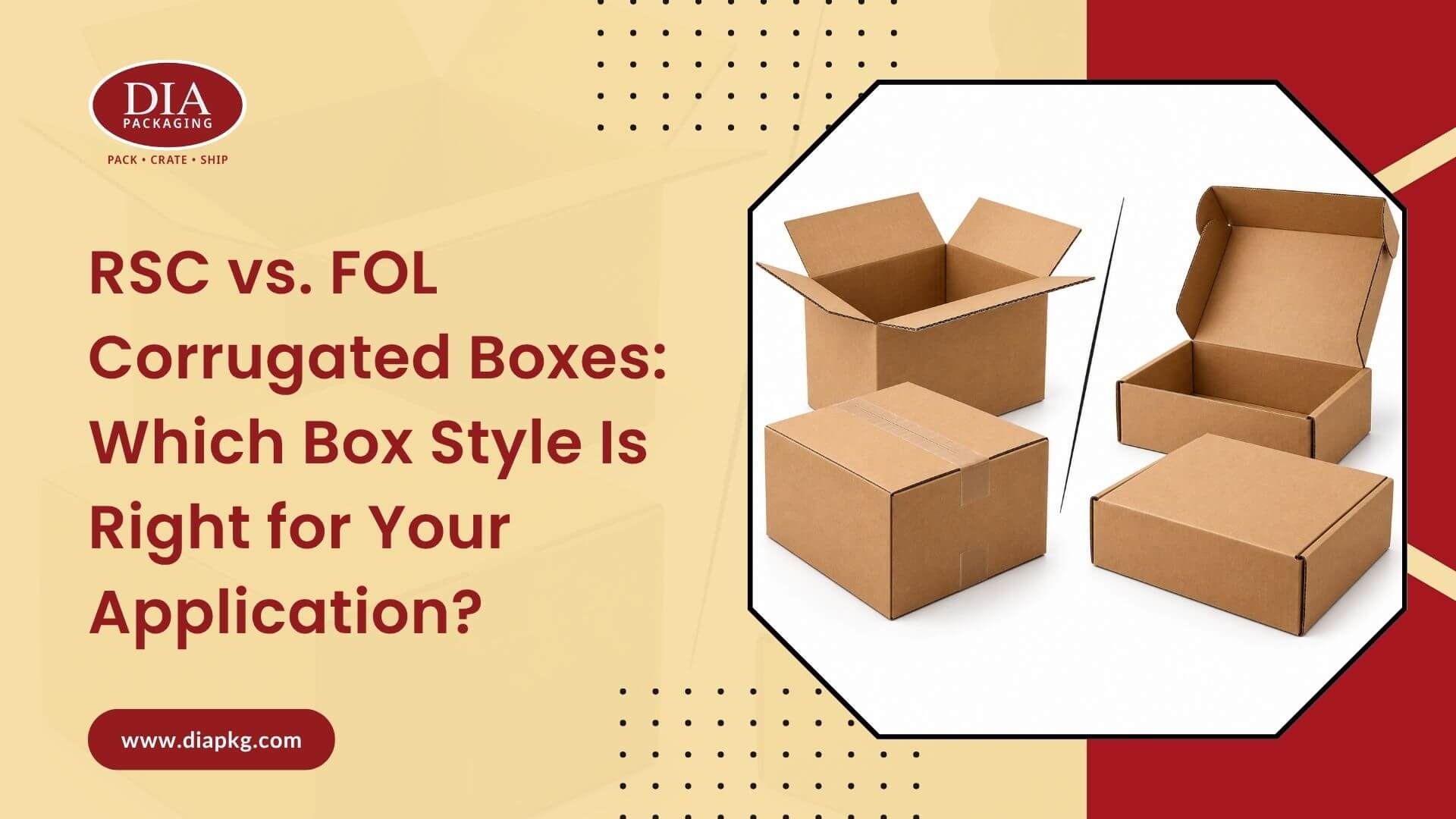
An RSC box has four flaps at the top and four at the bottom. The two larger flaps on each side meet in the middle when you close the box. You can then seal the center line with packing tape or another suitable sealing method.
This simple design makes RSC boxes easy to produce, store, and use.
Key Features of RSC Boxes
RSC corrugated boxes offer several useful features:
- Simple design: The flaps fold toward the center to close the box.
- Lower material use: The design often needs less cardboard than a similar FOL box.
- Easy packing: Workers can fold and seal the box with little effort.
- Flexible sizing: Manufacturers can produce RSC boxes in many sizes.
- Wide use: Businesses can use them for storage, shipping, and general packaging.
Common Uses of RSC Boxes
RSC boxes work well for many everyday packaging needs. Businesses often use them to ship clothing, books, toys, small appliances, household goods, and other general products.
They also suit warehouse storage and online orders. Their simple design helps packing teams prepare many boxes quickly.
For example, an online store that ships lightweight household products may choose RSC boxes because they offer reliable protection without adding unnecessary packaging material.
However, the right strength still depends on the product’s weight, size, and shipping conditions. A basic RSC box may not provide enough protection for every heavy or fragile item.
What Is an FOL Corrugated Box?
A Full Overlap box, or FOL box, is another common corrugated packaging style. Its main difference lies in the length of its outer flaps.
Unlike an RSC box, an FOL box has outer flaps that extend across the full width of the box. When you close the box, these flaps overlap each other instead of meeting only at the center.
This design creates extra layers of corrugated board across the top and bottom panels. It can improve protection against pressure, wear, and certain types of handling damage.
Key Features of FOL Boxes
FOL corrugated boxes provide several useful features:
- Overlapping flaps: The outer flaps cover the full width of the box.
- Extra top and bottom coverage: Overlapping cardboard creates additional layers.
- Better surface protection: The extra layers can help protect products from pressure and rough handling.
- Useful for heavier goods: Properly designed FOL boxes can support demanding shipping needs.
- Greater material use: The overlapping flaps usually require more cardboard than a comparable RSC design.
Common Uses of FOL Boxes
Businesses often choose FOL boxes for products that need extra protection during shipping or storage.
Common examples include metal parts, industrial equipment, machine components, heavy tools, and products with wide, flat surfaces.
For instance, a manufacturer shipping metal components may choose an FOL box to add more cardboard coverage to the top and bottom. This can help reduce the risk of damage during handling.
Still, an FOL design alone does not guarantee that a box can carry a particular load. The board grade, box size, weight distribution, and shipping conditions also matter.
RSC vs FOL Corrugated Boxes: Key Differences
The main difference between RSC and FOL corrugated boxes is their flap design. That difference affects material use, protection, cost, and packing needs.
Here is a simple comparison to help you understand both options.
| Feature | RSC Box | FOL Box |
|---|---|---|
| Full form | Regular Slotted Container | Full Overlap |
| Flap design | Outer flaps meet at the center | Outer flaps overlap fully |
| Cardboard use | Usually lower | Usually higher |
| Top and bottom coverage | One layer across the center area | Extra layers from overlapping flaps |
| Packing process | Simple and quick | May require more care when folding |
| Cost | Often lower for similar specifications | May cost more due to extra material |
| Best suited for | General shipping and storage | Applications that need extra surface coverage |
| Common products | Clothing, books, household goods | Heavy parts, tools, industrial goods |
Remember that these comparisons describe typical designs. The actual performance and cost depend on the box specifications and the packaging supplier.
1. Strength and Product Protection
Strength is one of the most important factors when choosing between RSC and FOL boxes.
How Strong Are RSC Boxes?
RSC boxes provide good protection for many everyday products. Their performance depends on the corrugated board grade, the box dimensions, and the way you pack and seal them.
Businesses can use single-wall, double-wall, or other suitable corrugated board constructions based on their needs.
For example, a business that ships books or packaged clothing may find that a well-designed RSC box provides enough protection.
However, products that place heavy pressure on the box panels may need a stronger design.
How Strong Are FOL Boxes?
FOL boxes provide extra cardboard coverage across the top and bottom because their flaps overlap.
This added coverage can help protect the contents from pressure, surface wear, and certain types of impact. It can also make the box a useful choice for heavy or industrial products when the manufacturer designs it for that purpose.
However, you should not assume that every FOL box is stronger than every RSC box. A well-made RSC box with a stronger board grade may outperform a poorly specified FOL box.
Which should you choose?
Choose an RSC box for products that need standard shipping protection. Consider an FOL box when you need extra top and bottom coverage or expect demanding handling conditions.
For heavy or valuable products, ask your packaging supplier to recommend a suitable board grade and test the box with your actual product.
2. Material Use and Packaging Cost
Packaging costs affect every business, especially companies that ship hundreds or thousands of orders each month.
RSC and FOL boxes can have different production costs because their flap designs use different amounts of cardboard.
RSC Box Costs
Regular Slotted boxes often cost less because their standard flap design uses less material than a comparable FOL box.
They also work well with many common packing and sealing systems. This can help businesses manage packing time and labor costs.
If you ship large numbers of lightweight or medium-weight products, RSC boxes may offer a practical way to control packaging expenses.
FOL Box Costs
FOL boxes usually require more corrugated board because their flaps overlap across the full width.
This extra material can increase the box’s purchase price. However, the added protection may provide value when a product needs more coverage during shipping.
For example, preventing damage to an expensive machine part may save more money than choosing the lowest-priced box.
Which should you choose?
Choose RSC boxes when you want a cost-effective solution for general packaging. Consider FOL boxes when their added protection supports your product’s needs.
Compare the total packaging cost, including box price, tape, labor, storage, and possible product damage. Do not make your decision based on the box price alone.
3. Ease of Packing and Sealing
Your box design can affect how quickly your team prepares orders.
Packing With RSC Boxes
RSC boxes have a straightforward folding process. Workers fold the bottom flaps, seal them, add the product, and close the top flaps.
The design suits many manual packing stations and automated packaging lines. It can help businesses maintain a simple and repeatable packing process.
Packing With FOL Boxes
FOL boxes need careful flap alignment because the outer flaps overlap. Workers must fold the flaps in the correct order to create the intended coverage.
This process may take a little more time, depending on the box size and packing setup. However, workers can still pack FOL boxes efficiently with the right instructions and equipment.
Which should you choose?
RSC boxes often suit businesses that value fast packing and simple sealing. FOL boxes make sense when the extra coverage matters more than a small difference in packing time.
Before placing a large order, test both designs at your packing station. This helps you compare the actual time and effort each style requires.
4. Storage and Shipping Needs
Your storage space and shipping method can also affect your decision.
RSC boxes have a common design that works well for many warehouse and shipping operations. Businesses can store flat boxes until they need them, then fold and seal them during packing.
FOL boxes can also ship and store flat before use. However, their larger flaps may change the flat box dimensions and material requirements.
Both styles can work for courier delivery, pallet storage, and truck transport when the supplier designs them for the job.
The key is to consider how your team handles the box throughout its journey.
Ask yourself these questions:
- Will workers stack the boxes on pallets?
- Will the boxes carry heavy products?
- Will the boxes travel long distances?
- Will the shipment face rough handling or frequent movement?
- Will the products need extra protection from pressure?
If your answers point to higher protection needs, discuss an FOL design with your packaging supplier. If your products need standard protection, an RSC box may be enough.
5. Which Box Style Is Better for Your Industry?
Different industries handle different products, so they may need different box styles.
E-Commerce and Retail
RSC boxes often suit e-commerce and retail businesses because they offer a simple, practical design for everyday shipments.
Stores can use them for clothing, toys, books, accessories, and many household products.
However, fragile products may need inserts, dividers, cushioning, or stronger corrugated board, regardless of the box style.
Manufacturing and Industrial Packaging
Manufacturers often ship machine parts, tools, metal components, and other industrial products.
FOL boxes can suit these applications because the overlapping flaps add coverage to the top and bottom panels.
The final choice should depend on the product’s weight, shape, and handling requirements.
Electronics and Fragile Products
Both RSC and FOL boxes can protect electronics when businesses choose the correct board grade and add suitable internal packaging.
An FOL box may offer useful extra surface coverage, but it cannot replace proper cushioning.
For fragile products, use protective inserts, foam, molded pulp, or other suitable materials to limit movement and absorb shocks.
6. How to Choose the Right Corrugated Box Style
You can make a better packaging decision by reviewing a few important factors before ordering your boxes.
Step 1: Check the Product Weight
Start by measuring how much your product weighs.
Lightweight goods may work well in RSC boxes. Heavier products may need an FOL design or another reinforced box style.
Do not rely on the box style alone. Ask your supplier to match the board strength to the total packed weight.
Step 2: Measure the Product Size
Measure the product’s length, width, and height. Then allow enough room for any protective inserts or cushioning.
A box that fits too tightly may damage the product. A box that leaves too much empty space may allow the contents to move during shipping.
Choose a design that fits the product and supports safe packing.
Step 3: Understand the Shipping Conditions
Consider the full journey from your warehouse to the customer.
A local delivery may involve different risks than a long-distance shipment. Pallet stacking, humidity, repeated handling, and transport conditions can all affect box performance.
Discuss these factors with your packaging supplier before choosing a final design.
Step 4: Set Your Packaging Budget
Compare the cost of both box styles at the quantities you plan to order.
Include material costs, packing time, sealing supplies, storage needs, and the cost of damaged products.
A lower-priced box may not provide the best value if it leads to more returns or product losses.
Step 5: Test Before Ordering in Bulk
Order samples of the box styles you want to compare.
Pack each box with the actual product and the intended cushioning. Then check how the box closes, seals, stacks, and handles normal shipping conditions.
For heavier or higher-risk shipments, ask your supplier about suitable compression, stacking, or distribution tests.
Testing helps you choose a box based on performance rather than appearance alone.
7. Common Mistakes to Avoid When Choosing RSC or FOL Boxes
Businesses sometimes focus on one feature and overlook other important packaging needs.
Avoid these common mistakes:
Choosing only by price: A cheaper box may not provide enough protection for your product. Compare total costs instead.
Assuming FOL always means stronger: Overlapping flaps add coverage, but board quality and box design also affect strength.
Ignoring product weight: A box that works for a light product may fail under a heavier load.
Using the wrong box size: Poor fit can lead to product movement, wasted space, and damage.
Forgetting internal protection: Fragile products may need cushioning even when you use a strong corrugated box.
Skipping sample tests: A box that looks suitable may not perform well under real shipping conditions.
By checking these factors before ordering, you can reduce packaging problems and make a better choice for your business.
Conclusion:
Choosing between RSC and FOL corrugated boxes comes down to your product, budget, and shipping needs.
RSC boxes offer a simple and cost-effective choice for many everyday packaging applications. Their standard flap design makes them useful for e-commerce, retail, and general shipping.
FOL boxes provide overlapping flaps that add extra cardboard coverage across the top and bottom. This design can suit heavy products, industrial parts, and shipments that need additional surface protection.
Neither style works best for every application. The right choice depends on your product’s weight, dimensions, handling conditions, and required level of protection.
Before placing a large order, compare box samples, review the board specifications, and test the packaging with your actual product.