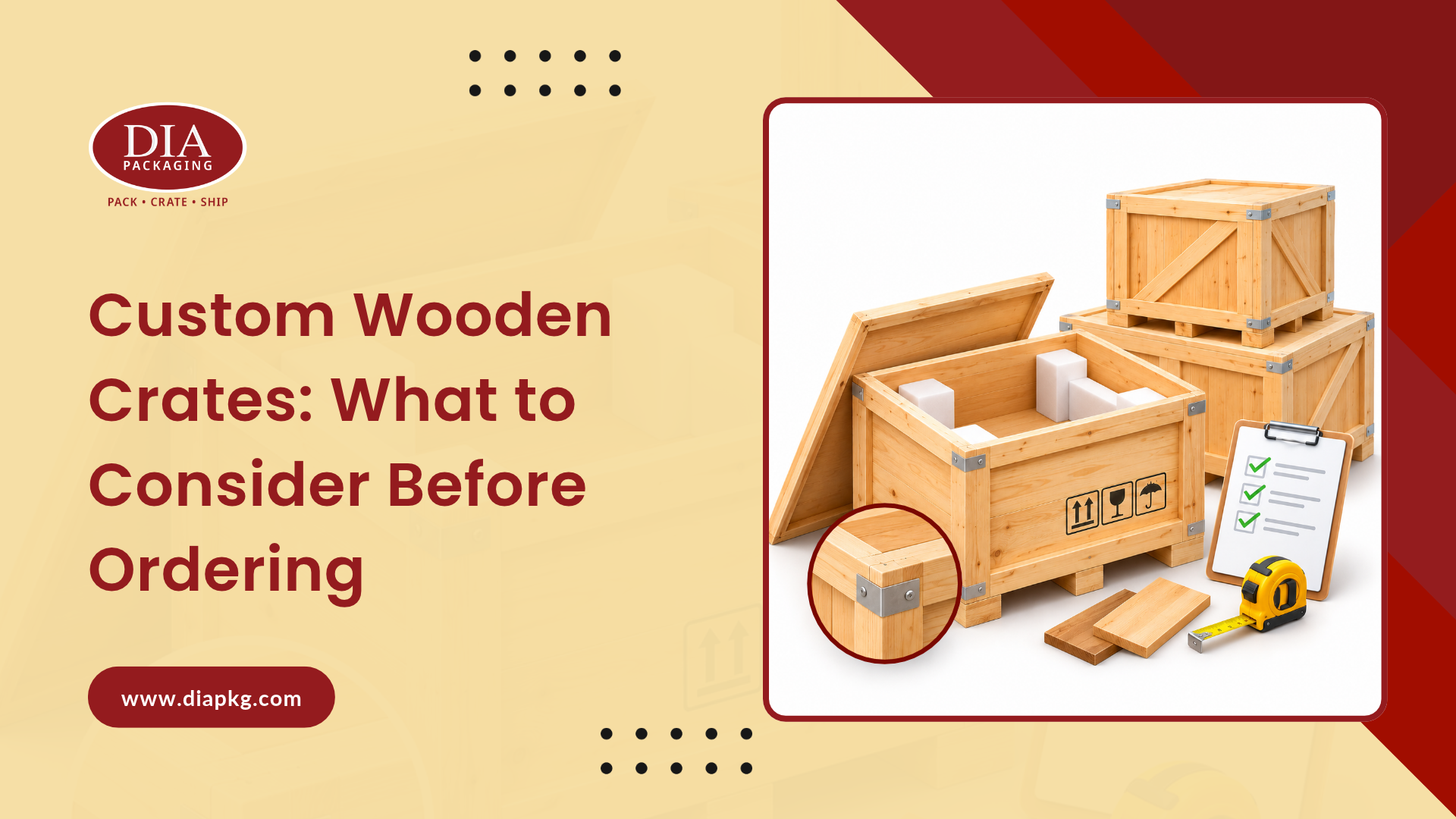
Wooden crates are widely used for packing, storing, and transporting different types of goods. From small machine parts to large industrial equipment, they provide a strong and reliable way to protect products during handling and shipping. However, not every product can fit safely into a standard wooden crate. This is where custom wooden crates become useful.
Custom wooden crates are designed according to the size, weight, shape, and protection needs of a particular product. They help reduce the risk of damage during transportation and make better use of available storage space. Whether you are shipping goods locally or sending products to another country, choosing the right crate can make a big difference.
Before placing an order, there are several things worth considering. A little planning can help you avoid unnecessary costs, prevent packaging problems, and ensure your products reach their destination safely.
1. Understand the Size and Weight of Your Product
The first thing to consider when ordering a custom wooden crate is the size and weight of the product you want to pack.
A crate that is too small may put pressure on the product, while one that is too large may allow the item to move around during transportation. Both situations can increase the chances of damage.
Measure the product carefully, including its length, width, and height. If the product has parts that extend outward, make sure to include those measurements as well.
Weight is equally important. A heavy product needs a stronger wooden structure with suitable support at the bottom. The crate should be able to handle the product’s weight without bending or breaking during lifting and movement.
It is also a good idea to discuss the measurements with your crate manufacturer. They can suggest the right internal and external dimensions based on your packaging requirements.
2. Choose the Right Type of Wood
Not all types of wood offer the same level of strength and durability. The type of wood used in your crate can affect its overall performance, weight, and cost.
Common wood choices include pine, plywood, hardwood, and other suitable timber materials.
- Pine wood: Often used for general packaging because it is relatively lightweight and easy to work with.
- Plywood: Offers a smooth and stable surface. It is commonly used for products that need enclosed packaging.
- Hardwood: Suitable for certain heavy-duty applications where additional strength is required.
- Other timber materials: Depending on availability and the intended use, manufacturers may suggest other wood options.
The best choice depends on what you are shipping. For example, a lightweight product may not require a heavy-duty wooden crate. On the other hand, large industrial equipment may need a stronger structure.
Speak with your manufacturer about the type of wood that offers the right balance between strength, weight, and price.
3. Consider the Level of Protection Required
The main purpose of a wooden crate is to protect the product inside it. However, different products have different protection needs.
Some products can handle regular movement, while others are sensitive to vibration, moisture, dust, or sudden impact.
If you are shipping delicate equipment, electronic items, glass products, or precision machinery, you may need additional protection inside the crate.
Some common protective options include:
- Foam padding to reduce the impact of sudden movement.
- Wooden supports to keep heavy products in a fixed position.
- Plastic sheets to protect against dust and moisture.
- Rubber padding to reduce vibration.
- Internal partitions to keep multiple items separate.
Think about the conditions your product may face during transportation. Will it be moved several times? Will it travel long distances? Could it be exposed to rain or humid conditions?
Answering these questions will help you decide what type of protection is necessary.
4. Check International Shipping Requirements
If you plan to export goods, international shipping rules should be considered before ordering wooden crates.
Many countries follow ISPM 15 guidelines for wood packaging materials used in international trade. These guidelines are designed to prevent the spread of insects and pests through untreated wood.
Wooden packaging materials that fall under these rules generally need approved treatment and an official mark showing compliance.
Heat treatment is a commonly used method. It involves heating the wood according to the required temperature and time conditions.
Before placing your order, ask your manufacturer whether they can provide ISPM 15 compliant wooden crates when required. Also, check the import rules of the destination country.
This step is important because packaging that does not meet the required standards may face delays, additional inspection, treatment, or rejection at the destination.
5. Think About How the Crate Will Be Handled
A wooden crate may be strong enough to hold your product, but it should also be easy and safe to handle.
Consider how the crate will be lifted, moved, loaded, and unloaded. Will workers use a forklift, pallet truck, or crane? The answer will help determine the crate’s design.
For example, forklift pockets can be added to the bottom of a crate to make lifting easier. Heavy products may need additional support underneath to distribute their weight evenly.
If the crate will be lifted using a crane, suitable lifting points may be required. These should be designed according to the total load and lifting method.
Also, consider the final destination. If the crate will be unloaded in a warehouse with limited space, its dimensions and handling features should suit that environment.
Discussing these details before production can prevent handling problems later.
6. Decide Between Open and Closed Wooden Crates
Custom wooden crates are available in different designs. Two common options are open crates and closed crates.
Open wooden crates have visible gaps between wooden boards. They are often suitable for products that do not require complete coverage. They can also be useful for certain large items that need a simple protective structure.
Closed wooden crates have wooden panels around the product. They provide better coverage against dust, dirt, and some external contact. They are often preferred for valuable equipment, machinery, and products that need more protection.
The right design depends on the product and shipping conditions. If you need additional protection from moisture or dust, you may also require a suitable internal lining or protective covering.
Your manufacturer can help you select a design that meets your needs without adding unnecessary material or cost.
7. Compare Quality and Price
Price is naturally an important factor when ordering custom wooden crates. However, choosing the cheapest option may not always be the best decision.
A low-priced crate may use thinner wood, fewer support sections, or a design that does not provide enough protection for your product.
Instead of looking at the price alone, compare the overall quality.
Ask manufacturers about the following:
- Type and thickness of wood used.
- Quality of joints and fasteners.
- Load-bearing capacity.
- Internal support and padding options.
- Surface finishing and treatment.
- Manufacturing time and delivery schedule.
You should also ask for a detailed quotation. It should clearly mention the crate dimensions, material specifications, additional features, and any treatment charges.
Comparing quotations based on the same specifications will help you make a fair decision.
8. Ask About Customization Options
One of the biggest advantages of custom wooden crates is that they can be designed according to your requirements.
Depending on your product, you may need special features such as removable panels, internal supports, handles, hinges, or additional compartments.
For example, machinery that needs regular maintenance may benefit from a crate with removable sections. Products that need to remain in a fixed position may require specially designed wooden supports.
You can also ask for labels, handling instructions, product details, and identification marks on the outside of the crate.
These small details can make packing, storage, and transportation easier.
Before ordering, share your requirements clearly with the manufacturer. If possible, provide product photographs, drawings, or technical specifications to avoid misunderstandings.
9. Confirm Delivery Time and Order Quantity
Delivery time is another important factor, especially if your shipment follows a fixed schedule.
Custom wooden crates are made according to specific measurements and requirements. Their production may take longer than purchasing ready-made packaging.
Ask the manufacturer how much time they need for design, material preparation, production, and delivery.
If you need a large number of crates, discuss whether the manufacturer can supply the complete order within your required timeline.
It is also worth checking whether they can handle repeat orders with the same specifications. This is useful for businesses that regularly ship similar products.
Planning ahead can help you avoid last-minute packaging delays.
10. Work With an Experienced Wooden Crate Manufacturer
The quality of your wooden crate depends not only on the materials but also on the manufacturer’s experience.
An experienced manufacturer can understand your product requirements, recommend suitable materials, and suggest a practical design.
Before choosing a supplier, ask about their previous projects and experience with similar products. You can also request samples, product photographs, or references if available.
A good manufacturer should be willing to understand your needs rather than simply offer a standard design. They should also explain the available options, pricing, and production schedule clearly.
Good communication before production can help avoid costly mistakes and ensure that the final crate meets your expectations.
Conclusion
Ordering custom wooden crates requires more thought than simply choosing a box that fits your product. You need to consider the product’s size and weight, the type of wood, protection requirements, shipping conditions, handling methods, and applicable export regulations.
Taking time to discuss these details with your manufacturer can help you get a crate that offers the right level of protection without unnecessary expenses.
Whether you are shipping industrial machinery, delicate equipment, or valuable products, the right wooden crate can make transportation safer and easier.
Before placing your order, make sure you understand your packaging needs and share them clearly with your supplier. A well-designed wooden crate is a practical investment that helps protect your goods from the beginning of their journey until they reach their destination.