Wooden crates are a mainstay in global logistics, agriculture, and industrial packaging for their unmatched durability, reusability, and eco-friendliness. A lot of businesses don’t really think about the full lifespan of wooden crates go through. From the moment the raw lumber is cut down, to how the crates get used day after day, and finally when they’re recycled or given a new purpose that whole lifecycle matters more than most realize. In fact, understanding this full journey can help businesses make smarter, more sustainable choices.
In this blog, we’ll explore the complete journey of a wooden crate and explain how understanding its lifecycle can help your business make more sustainable and cost-effective packaging choices.
As of mid‑2025, certified sustainable forests cover nearly 300 million hectares under the PEFC scheme and over 230 million hectares under FSC. Combined, these account for approximately 500 million hectares of forest area certified globally
Many companies and public buyers in the EU, North America, and parts of Asia increasingly require FSC- or PEFC-certified wood in their procurement to ensure it’s sourced legally and sustainably.
1: Sustainable Sourcing of Wood
The journey of every wooden crate begins with responsibly harvested timber, typically from:
- Pine: Lightweight, strong, and widely available, making it ideal for shipping crates.
- Spruce: Known for its good strength-to-weight ratio and ease of processing.
- Fir: Durable and dimensionally stable, making it suitable for long-term storage.
- Poplar: Lightweight and smooth-grained, often used when appearance or ease of handling is important.
These species are preferred for their strength-to-weight ratio and ease of processing. When sourced from FSC-certified (Forest Stewardship Council) forests, the wood supports sustainable forestry practices, biodiversity preservation, and responsible land use.
Benefits of Sustainable Wood:
- Renewable and biodegradable
- Lower carbon footprint compared to plastics or metals
- Supports local economies and forest management initiatives
Always look for crates made from FSC-certified or PEFC-certified wood to ensure sustainability from the start.
2: Manufacturing Wooden Crates
Once harvested, lumber is processed and cut into precise dimensions. The manufacturing process generally includes:
1. Drying or Heat Treatment
To prevent mold, insects, or warping, lumber is either kiln-dried or heat-treated. This is especially crucial for crates intended for export, as international standards like ISPM 15 require treated wood to reduce pest risks.
2. Cutting and Assembly
Boards are cut to design specifications and assembled using:
- Nails or screws
- Metal brackets or corner reinforcements
- Optional coatings (for weather resistance)
Crates can be:
- Open slat for ventilation (e.g., fruits and vegetables)
- Closed panel for heavy machinery or electronics
3. Customization
Crates are often tailored based on:
- Load-bearing capacity
- Forklift entry points
- Stackability
- Branding (stamped logos or labels)
3: In Use Phase – Storage and Transport
Now in active service, wooden crates serve their primary role: protecting and transporting goods.
Common Applications:
- Agriculture: For fresh produce, root vegetables, or bulk grain.
- Industrial: Transporting engines, auto parts, chemicals, or construction tools.
- Logistics & Warehousing: Crates stack efficiently and can be used for long-term storage.
Advantages in Use:
- Shock absorption and strength
- Ventilation for perishable goods
- Easy to repair and reuse
- Forklift and pallet-jack compatible
Many businesses reuse wooden crates for multiple shipping cycles, thanks to their robust build and resistance to wear.
4: Repair and Reuse
A key benefit of wooden crates is their reparability. Even after years of use, they can be refurbished with simple tools and techniques.
How Businesses Reuse Crates:
- Replace broken boards or fasteners
- Reinforce corners or add skid plates
- Sand and reseal for new shipments
- Reassign crates for different product categories
Some companies implement crate return programs, where crates are sent back, repaired, and reused saving costs and reducing waste.
5: End-of-Life Recycling and Disposal
When wooden crates reach the end of their usable life, they still offer environmental value.
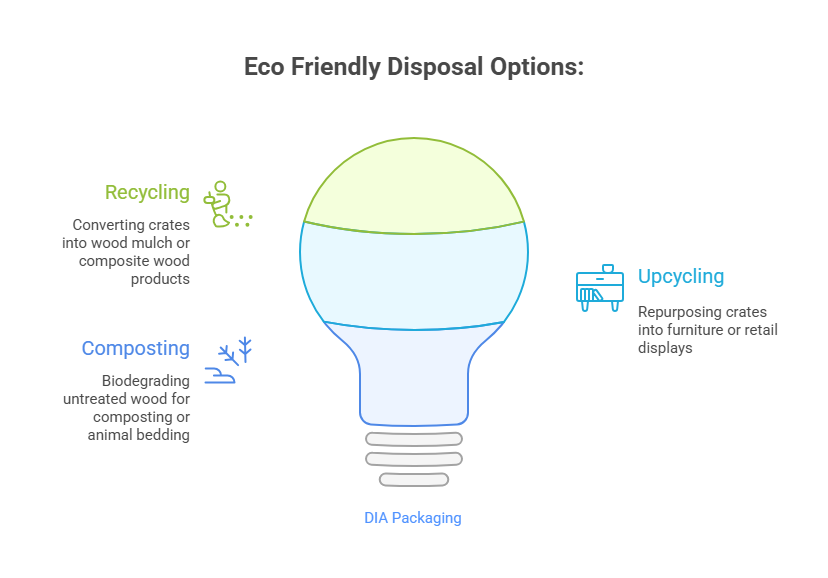
Eco-Friendly Disposal Options:
1. Recycling
Old or broken crates don’t have to go to waste. Wood recyclers can process them into:
- Wood mulch for landscaping
- Wooden pallets used as bioenergy fuel
- Composite wood products such as particleboard or fiberboard, commonly used in construction and furniture manufacturing
Recycling gives the wood a second life and keeps it out of landfills.
2. Upcycling
Instead of discarding crates, many businesses creatively repurpose them. Common upcycling uses include:
- Furniture like tables, benches, or shelves
- Retail displays that add a rustic or industrial look
- Garden planters or storage bins for produce
- Decorative fixtures in stores, cafes, or markets
Upcycling not only reduces waste, it can also add value, style, and function to your space or brand.
3. Composting
If you use untreated wood to make crates-meaning no paint, varnish, or chemical treatments they’re safe to:
- Compost, breaking down naturally into nutrient-rich material
- Use as animal bedding or mulch in agricultural settings
This method is especially popular in farming and gardening because people prefer natural decomposition.
Environmental Impact: A Cradle-to-Grave Analysis
| Lifecycle Stage | Sustainability Benefit |
|---|---|
| Sourcing | Renewable material; low-emission harvesting |
| Manufacturing | Low-energy process compared to plastic or steel |
| Usage | Reusability reduces need for single-use packaging |
| Repair | Extends product life and delays end-of-life waste |
| Recycling/Upcycling | Reduces landfill contribution; encourages circular economy |
Business Benefits of Understanding the Crate Lifecycle
1. Cost Savings
If you reuse or fix wooden crates, you’ll save a lot on packaging costs. Instead of always buying new ones, you can keep using the old crates by giving them some regular care or quick repairs. Doing this over time means you spend less on materials and cut down your overall expenses.Over time, this reduces spending on materials and lowers the overall cost of operations.
2. Regulatory Compliance
When shipping crates internationally, companies must ensure they meet certain standards like the ISPM 15 regulation, which requires heat-treating crates to prevent the spread of pests. Understanding these rules ensures your shipments move smoothly across borders, avoiding delays, fines, or rejected goods.
3. Improved Brand Image
Today’s consumers and business partners value sustainability. By recycling, reusing, or upcycling crates, your company can showcase its commitment to environmentally responsible practices. This can strengthen your brand’s reputation, attract eco-conscious clients, and even open up opportunities with businesses that prioritize green supply chains.
4. Waste Reduction
Proper lifecycle management helps reduce waste. By extending the life of crates and recycling materials at the end, businesses send less to landfills. This not only lowers disposal fees but also supports sustainability goals, especially important in industries with strict environmental reporting or certification requirements.
Why Sustainable Sourcing Matters:
- Forest Conservation: It ensures that forests stay healthy by requiring trees to be replanted or naturally regenerated.
- Reduced Carbon Footprint: Responsibly managed forests act as carbon sinks, helping offset emissions from manufacturing and transport.
- Compliance with Standards: Wood sourced from certified forests, like those certified by the FSC (Forest Stewardship Council) or PEFC (Programme for the Endorsement of Forest Certification) meets both environmental and legal standards.
- Reputation and Responsibility: Choosing sustainable wood contributes to corporate social responsibility and strengthens your brand’s environmental credibility.
Sustainable sourcing is the first and foundational step in the wooden crate lifecycle and it sets the tone for an eco-conscious supply chain from the very beginning.
Final Thoughts
Wooden crates are more than just shipping containers they’re part of a circular packaging system that supports durability, reuse, and sustainability. By understanding each stage of the crate’s lifecycle from sourcing and manufacturing to use, repair, and recycling your business can make more informed, eco-friendly, and cost-effective decisions.
Whether you work in agriculture, logistics, manufacturing, or retail, embracing the full lifecycle of wooden crates shows your company as a responsible leader in the global supply chain.