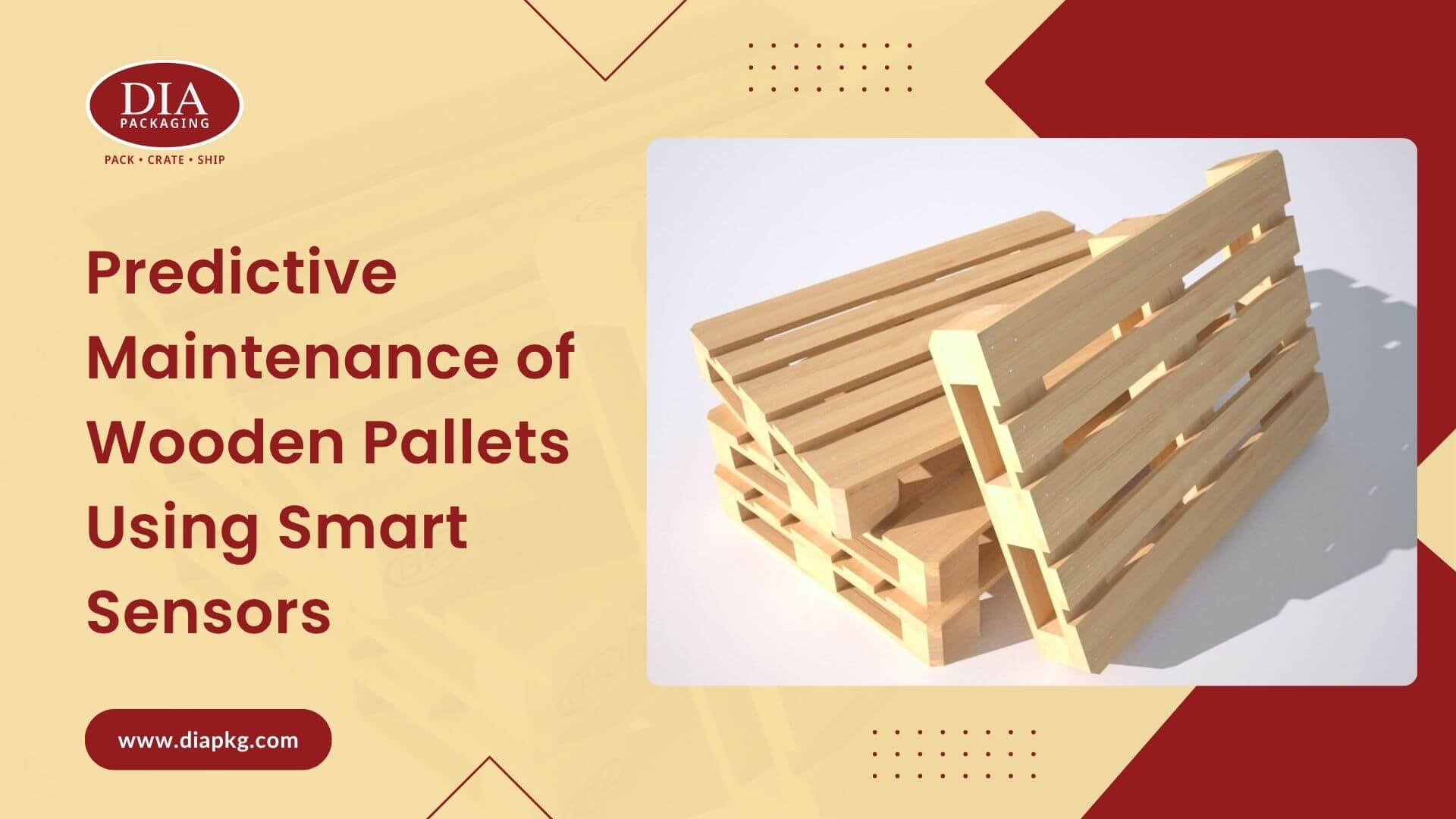
Wooden pallets are use for every day to move and store goods. You can find them in warehouses, factories, stores, and shipping centers. They carry heavy boxes and help move products safely from one place to another.
Even though wooden pallets look simple, they play an important role in the supply chain. A damaged pallet can cause many problems. It can break while carrying goods, damage products, slow down work, and even lead to accidents.
Many companies check pallets only after they show signs of damage. This means they often repair or replace pallets too late. A better way is to find small problems before they become big ones. This is called predictive maintenance.
Today, smart sensors make predictive maintenance possible. These small devices collect useful information about each pallet. They help companies know when a pallet needs repair or replacement before it fails.
This article explains how predictive maintenance helps wooden pallets. why it is important, and how smart sensors make it easier to check their condition.
What Is Predictive Maintenance?
Predictive maintenance means checking equipment often to find small problems before it breaks.
Think about riding a bicycle. If you wait until the tire bursts, you may get stuck on the road. But if you check the tire often and notice small cracks, you can replace it before it causes trouble.
The same idea works for wooden pallets.
Instead of waiting until a pallet breaks, companies collect information about its condition. This helps them repair or replace the pallet at the right time.
This method saves money and keeps work running smoothly.
What Are Smart Sensors?
Smart sensors are small electronic devices that collect information from the objects they are attached to.
When placed on wooden pallets, they can measure different things such as:
- Weight carried by the pallet
- Temperature
- Humidity, which means the amount of moisture in the air
- Shocks from drops or hard impacts
- Vibration during transport
- Location of the pallet
The sensors send this information to a computer or cloud system.
The system studies the data and looks for signs that a pallet may be wearing out.
If the system finds a problem, it sends an alert so workers can inspect the pallet.
Why Wooden Pallets Need Monitoring
Wood is a strong material, but it does not last forever.
Wooden pallets go through many difficult conditions every day. They carry heavy loads, travel long distances, and are often stacked on top of each other. They may also stay outside in rain, heat, or cold weather.
Over time, these conditions can cause problems such as:
- Cracked boards
- Loose nails
- Bent or broken parts
- Moisture damage
- Mold growth
- Weak support for heavy loads
Some damage is easy to see. Other damage starts inside the wood and becomes visible only after it gets worse.
Smart sensors help find these hidden problems early.
How Smart Sensors Work
The process is simple and easy to understand.
First, a smart sensor is attached to a wooden pallet.
As the pallet moves through warehouses and delivery routes, the sensor keeps collecting information.
The data is sent wirelessly to a computer system.
The system studies the information and compares it with normal pallet conditions.
If a pallet carries too much weight, gets hit hard, or becomes too wet, the system tells workers to check it.
Workers then check the pallet and decide whether it needs repair or replacement.
This helps stop failures before they happen.
Benefits of Predictive Maintenance
Predictive maintenance offers many advantages for companies that use large numbers of wooden pallets.
Better Safety
Broken pallets can fall apart while carrying goods. This can damage products and injure workers.
Finding damage early helps prevent accidents.
Lower Repair Costs
Small repairs usually cost less than replacing an entire pallet.
Fixing problems early also reduces waste.
Longer Pallet Life
Not every pallet needs to be replaced quickly.
Regular monitoring helps companies use pallets safely for a longer time.
Fewer Product Losses
A damaged pallet can cause boxes to fall during transport.
Keeping pallets in good condition protects valuable products.
Less Downtime
When pallets fail during work, loading and shipping may stop.
Predictive maintenance reduces unexpected delays.
Better Planning
Managers know which pallets need attention before problems happen.
This makes maintenance schedules easier to organize.
The Role of Data
Data is simply information collected over time.
Each sensor collects small pieces of information every day.
One reading may not tell much. But after collecting many readings, the system begins to notice patterns.
For example, one pallet may experience many heavy impacts every week.
Another pallet may stay in very humid places for long periods.
The system learns which conditions often lead to damage.
This helps companies make better decisions about pallet maintenance.
Using Artificial Intelligence
Some companies use artificial intelligence, also called AI, with smart sensors.
AI is a computer system that learns from information and helps make decisions.
For example, AI can study thousands of sensor readings from many pallets.
It can find patterns that people may not notice. The system can estimate which pallets are most likely to fail soon.
Workers can then inspect those pallets first. This saves time and improves maintenance planning.
Challenges to Consider
Although predictive maintenance offers many benefits, there are also some challenges.
The first challenge is cost. Buying smart sensors and installing them on many pallets requires money.
Another challenge is battery life. Many sensors run on batteries that need replacement after some time.
Companies also need a reliable internet connection or wireless network so the sensors can send information.
Workers may also need training to understand the reports and alerts. Even with these challenges, many companies find that the long term savings are greater than the starting costs.
Where Predictive Maintenance Is Used
Many industries depend on wooden pallets every day. Food companies use pallets to move fruits, vegetables, and packaged foods.
Factories use them to carry machine parts and raw materials. Retail stores use pallets to receive and organize products.
Pharmaceutical companies use pallets to transport medicines safely.
Shipping and logistics companies move thousands of pallets every day across different cities and countries.
In all these places, smart sensors help improve pallet safety and reduce unexpected failures.
The Future of Smart Wooden Pallets
Technology continues to improve every year.
Future smart sensors may become smaller, cheaper, and more powerful.
Some sensors may collect even more detailed information while using less battery power.
Companies may also connect pallet data with warehouse software.
This will allow managers to track pallet health, location, and usage from one screen.
As technology becomes more affordable, even small businesses may begin using predictive maintenance.
This can help improve safety and reduce costs for companies of every size.
Simple Tips for Better Pallet Care
- Even with smart sensors, good pallet care is still important.
- Workers should inspect pallets regularly.
- Broken boards and loose nails should be repaired quickly.
- Pallets should be stored in dry places whenever possible.
- Heavy loads should stay within the pallet’s weight limit.
- Workers should avoid dropping pallets or handling them roughly.
- Combining good care with smart sensors helps pallets last longer and perform better.
Conclusion
Wooden pallets may seem like simple tools, but they play a big role in moving goods safely. When a pallet fails, it can damage products, slow down work, and create safety risks.
Predictive maintenance helps companies solve these problems before they happen. By using smart sensors, businesses can watch the condition of each pallet, collect useful information, and repair damage early.
This approach saves money, improves safety, reduces waste, and keeps operations running smoothly. As smart technology becomes more common, predictive maintenance is expected to become a normal part of pallet management.
With regular care and smart sensors, wooden pallets can stay strong and last longer. This helps move goods safely from one place to another and reduces the chance of damage or accidents.