When choosing a corrugated box, the type of flute matters more than you may think. The flute is the wavy layer of paper found between the flat sheets of a corrugated board. It helps the box stay strong, protect its contents, and handle bumps during storage and shipping.
Three common choices are B flute, C flute, and E flute. Each one has its own strengths. Some are better for heavy products, while others work well for small items or boxes that need a neat finish.
So, which one should you choose?
The answer depends on what you are packing, how much protection it needs, how the box will be used, and how you want the final box to look.
Let us look at B flute, C flute, and E flute in simple terms.
What Is a Corrugated Flute?
Before comparing the three types, it helps to understand what a flute is.
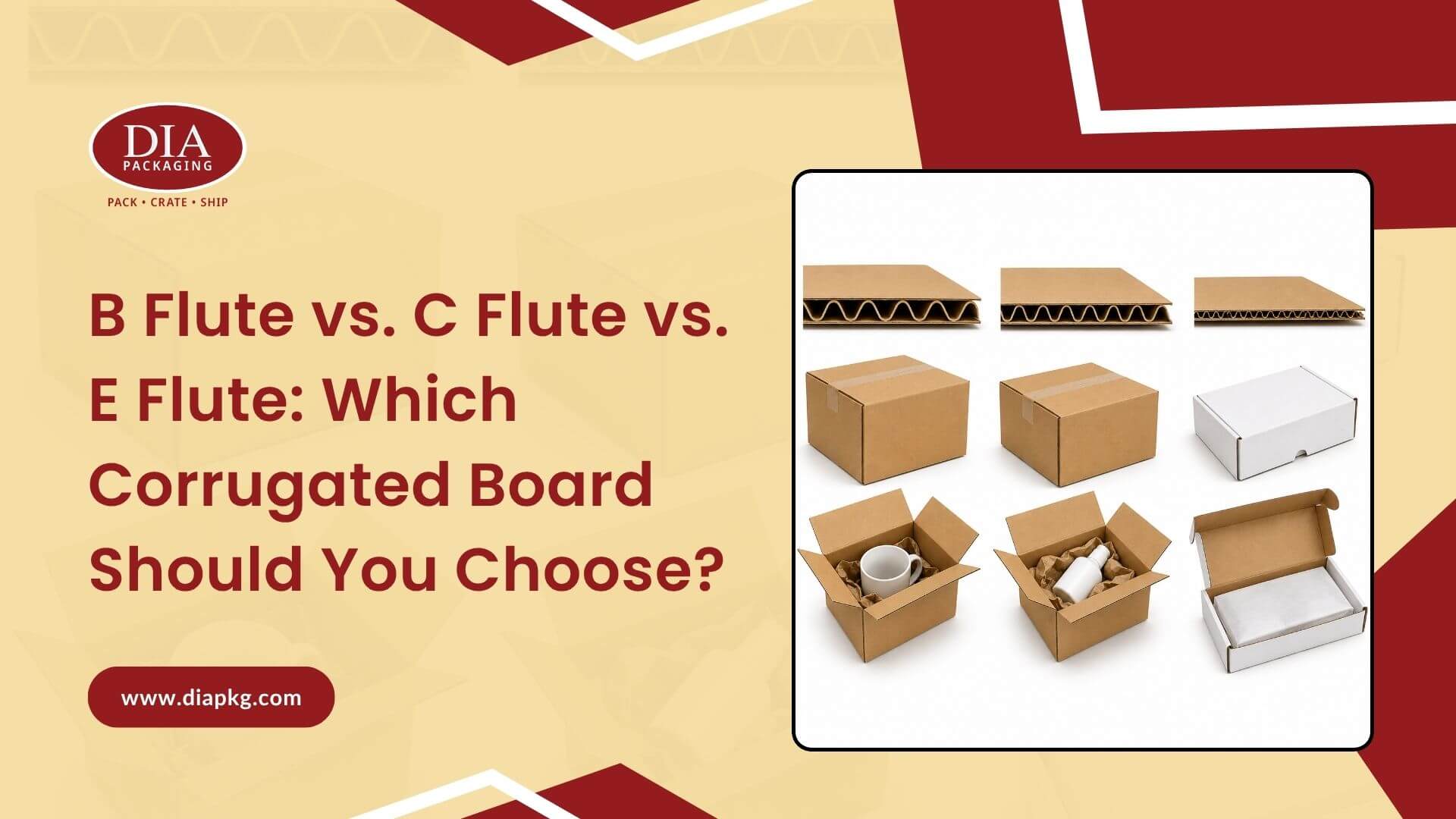
A corrugated board usually has flat paper sheets with a wavy paper layer between them. The wavy layer is called the flute. It gives the board strength while also adding some space between the outer sheets.
Think of it like a small cushion inside the box. When the box gets pressed or bumped, the flute helps absorb some of that force.
Flutes come in different sizes. A larger flute usually gives the board more cushioning and strength. A smaller flute makes the board thinner and gives the box a smoother surface.
This is why B, C, and E flutes can feel quite different even though they are all used to make corrugated boxes.
What Is B Flute?
B flute is a popular choice for shipping and general packaging. It is thinner than C flute but thicker than E flute.
It offers a good mix of strength and a fairly smooth surface. This makes it useful for many types of boxes.
B flute is often used for:
- Shipping boxes
- Food packaging
- Retail boxes
- Product cartons
- Boxes that need good stacking strength
- Packaging for medium-weight products
One of the main benefits of B flute is its resistance to crushing. It can handle regular handling and stacking without taking up as much space as a thicker flute.
B flute also gives you a fairly smooth surface for printing. If your box needs a logo, product details, or simple artwork, it can be a good choice.
For many everyday packaging needs, B flute is a practical middle-ground option.
What Is C Flute?
C flute is thicker than B flute. It is one of the most common flute types used for shipping boxes.
Its larger waves give it good cushioning. This can help protect products from bumps and pressure during transport.
C flute is often used for:
- Larger shipping boxes
- Heavy products
- Fragile products
- Moving boxes
- General transport packaging
- Boxes that need extra cushioning
If your product may be dropped, bumped, or stacked with other boxes, C flute can provide useful protection.
The trade-off is that C flute is thicker. This means the box may take up a little more space and may not have the same smooth feel as a box made with a smaller flute.
Still, when protection is the main goal, C flute is often a strong choice.
What Is E Flute?
E flute is much thinner than both B flute and C flute. Its small waves create a smooth, neat board that works well for smaller boxes and printed packaging.
E flute is often used for:
- Retail packaging
- Gift boxes
- Cosmetic boxes
- Small electronics packaging
- Food cartons
- Product boxes
- Packaging where appearance matters
Because E flute is thin, it can give a box a cleaner and more polished look. It also works well when you want sharp folds and detailed printing.
However, E flute is not usually the first choice for very heavy products or boxes that need to survive rough shipping conditions.
For lightweight products that need a neat presentation, E flute can be an excellent option.
B Flute vs. C Flute vs. E Flute
Here is a simple comparison:
| Feature | B Flute | C Flute | E Flute |
| Thickness | Medium | Thick | Thin |
| Protection | Good | Very good | Basic to good |
| Cushioning | Good | Very good | Limited |
| Surface smoothness | Good | Fair | Very good |
| Printing | Good | Good | Excellent |
| Best for | Shipping and general use | Heavy or fragile products | Retail and small products |
| Space needed | Medium | More | Less |
| Box appearance | Good | Standard | Clean and neat |
These are general differences. The paper, board construction, box design, and manufacturing process also affect the box’s strength.
Which Flute Is Best for Shipping?
If you are sending products through a delivery service, B flute or C flute will usually be more suitable than E flute.
C flute can be a better choice when the product is heavy or needs more cushioning. It is also useful for larger boxes.
B flute can work well when you want good protection without making the box too thick.
For example, a box carrying kitchen items, books, tools, or other medium-weight products may work well with B flute. A larger box carrying heavier items may benefit from C flute.
The right choice also depends on the type of shipping. A box that stays in a warehouse may not need the same protection as one that travels through several delivery centers.
Which Flute Is Best for Retail Packaging?
For retail packaging, E flute is often a good choice.
Retail boxes need to do more than protect a product. They also need to look good on a shelf or display table.
E flute has a smoother surface and works well with detailed printing. Its thinner structure can also help create neat folds and clean box shapes.
For products such as toys, small electronics, food items, beauty products, and gifts, E flute can provide a good balance between protection and appearance.
If the product is heavy or very fragile, however, you may need a thicker board or a different box design.
When Should You Choose B Flute?
Choose B flute when you want a good balance between protection, strength, and box size.
It can be a smart choice when:
- The product has medium weight.
- The box will be shipped.
- You need good resistance to crushing.
- You want a reasonably smooth printing surface.
- You do not want a very thick box.
B flute is often a safe starting point for general packaging because it can handle many common uses.
When Should You Choose C Flute?
Choose C flute when protection and cushioning are more important.
It can be a better option when:
- The product is heavy.
- The product is fragile.
- The box is large.
- The box will be stacked.
- The package may face rough handling.
- You need more space between the outer sheets for cushioning.
Keep in mind that a thicker flute does not automatically make every box better. A box that is too large, poorly designed, or made with weak paper may still fail during shipping.
When Should You Choose E Flute?
Choose E flute when appearance, printing, and a compact box are important.
It can be a good option when:
- The product is lightweight.
- The box will be placed on a retail shelf.
- You want detailed printing.
- You want a neat and smooth surface.
- The package needs clean folds.
- You want to keep the box thin.
E flute is especially useful for products where the package is part of the customer experience.
Do You Always Need One Type of Flute?
No. There is no single flute that works best for every product.
Choose the right flute based on your product and how you plan to use the box.
For example, a small item that needs a beautiful printed box may be better suited to E flute. A medium product that needs to travel through a delivery network may work well in B flute. A large or fragile item may need C flute for extra cushioning.
You should also think about the box size. A small box and a large box may need different board types even if they hold similar products.
The weight of the product matters too. So does how many boxes will be stacked on top of each other.
Final Thoughts
Choosing between B flute, C flute, and E flute does not have to be difficult.
If you need a simple rule, think of it this way:
Choose C flute for more cushioning and heavier products. B flute for a balance of strength and size, and E flute for lighter products, better printing, and a neat retail look.
But do not choose based on flute type alone. Look at the product weight, box size, shipping conditions, stacking needs, and the look you want.
A well-made box uses the right board for the job. When you choose the flute carefully, you can protect your product while also getting a box that fits your needs and budget.