Medical equipment plays an important role in keeping people healthy. Hospitals, clinics, and health centers use many types of medical devices every day. These include machines used for checking heart health, scanning the body, testing blood, and helping patients breathe. Many of these devices are costly, delicate, and need special care during transport.
Moving medical equipment from one place to another is not always easy. A small mistake during packing or transport can cause damage. This may lead to repair costs, delays, and problems for hospitals and patients. This is why choosing the right packaging is so important.
Wooden packaging is one of the trusted ways to protect medical equipment during storage and transport. It provides strong support and helps keep valuable devices safe from outside damage. From small medical tools to large hospital machines, wooden boxes and crates can be made to fit different needs.
In this article, we will look at why wooden packaging is useful for medical equipment, its main benefits, and how to choose the right packaging.
Why Does Medical Equipment Need Special Packaging?
Medical equipment is often made with delicate parts. Some devices have glass screens, wires, small sensors, and other parts that can break if handled roughly.
For example, an ultrasound machine may have a screen, control buttons, and other sensitive parts. If the machine is not packed well, a sudden movement during transport could damage it.
Medical equipment may travel long distances by road, rail, sea, or air. During this journey, packages may face rough roads, changes in weather, dust, and repeated handling.
Good packaging helps protect medical devices from these problems. It also makes it easier to load, move, and store the equipment safely.
Wooden packaging is a useful choice because it offers strength, support, and the ability to handle heavy loads.
What Is Wooden Packaging?
Wooden packaging means using wood to make boxes, crates, pallets, and other packing materials. These items are used to store and move products safely.
Wooden boxes and crates are made in different sizes and shapes. They can be designed to hold small medical tools, large machines, or several pieces of equipment together.
Unlike simple cardboard boxes, wooden crates offer stronger support. They are useful when equipment is heavy, large, or needs extra protection.
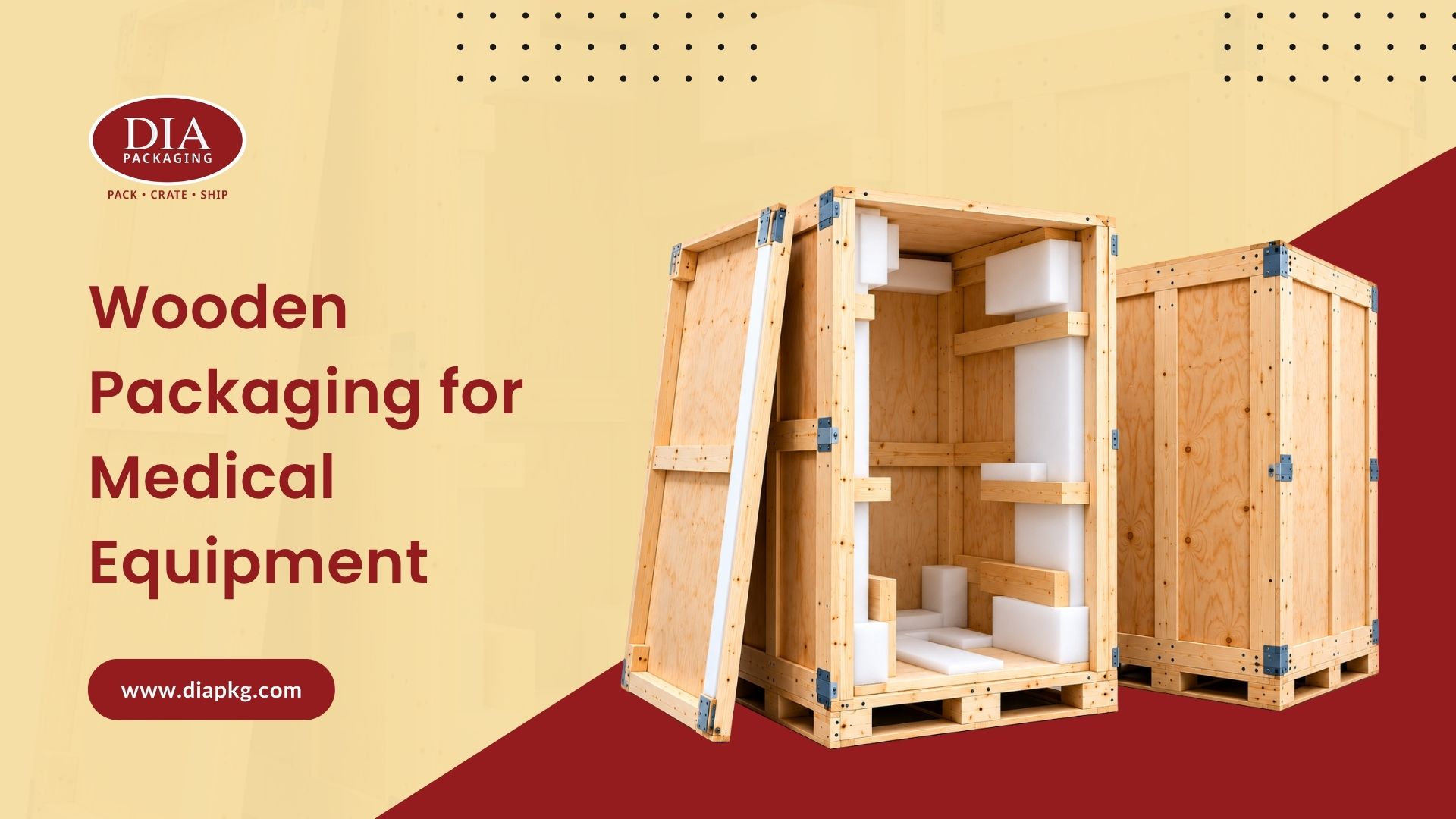
The inside of a wooden box can also be fitted with foam, soft padding, or other protective materials. These materials help stop the equipment from moving inside the box.
Benefits of Wooden Packaging for Medical Equipment
Wooden packaging offers several benefits when used for medical devices. Here are some of the main reasons why hospitals, medical equipment makers, and transport companies use it.
1. Strong Protection During Transport
One of the biggest benefits of wooden packaging is its strength. Medical machines can be heavy and costly. They need packaging that can support their weight.
Wooden crates provide a strong outer cover that helps protect equipment from bumps, pressure, and rough handling.
For example, a large X-ray machine may need a specially made wooden crate. The crate helps protect the machine while it is being moved from the factory to a hospital.
2. Protection from Physical Damage
Medical devices may have parts that are easy to damage. Screens, buttons, wires, and small parts need extra care.
Wooden boxes can be made with foam or soft padding inside. This helps hold the equipment in place and reduces the chance of damage caused by shaking or sudden movement.
The size and shape of the inside support can be changed to match the equipment.
This means the machine does not have to move freely inside the box during transport.
3. Suitable for Heavy Equipment
Some medical machines are too heavy for ordinary cardboard packaging. They need a strong base that can carry their weight.
Wooden pallets and crates are useful for moving heavy medical equipment. They can support large machines and make it easier to lift them with forklifts or other moving tools.
This also helps workers move equipment without lifting it by hand.
4. Made in Different Sizes and Shapes
Not all medical equipment looks the same. Some devices are small and light, while others are large and have unusual shapes.
Wooden packaging can be made to match the size and shape of each item.
For example, a small laboratory machine may need a compact wooden box, while a large hospital machine may need a bigger crate with extra support.
Custom-made wooden packaging helps reduce empty space and keeps the equipment properly placed.
5. Better Protection During Long-Distance Shipping
Medical equipment is often sent to different cities and countries. During long journeys, packages may be moved several times.
Wooden crates offer a strong outer layer that helps protect the equipment during loading, unloading, and storage.
They are especially useful for shipping heavy machines by sea or road.
For international shipping, wooden packaging must also follow the rules of the country receiving the goods.
Different Types of Wooden Packaging for Medical Equipment
Different types of wooden packaging are used depending on the size, weight, and safety needs of the equipment.
1. Wooden Boxes
Wooden boxes are used for packing medical devices that need a strong outer cover. They are available in different sizes and can be made according to the product.
They are useful for small and medium-sized medical machines and other valuable equipment.
2. Wooden Crates
Wooden crates are larger and often used for heavy or oversized medical machines.
They provide strong support and can be designed with extra wooden frames to protect the equipment.
Crates may have open spaces between wooden boards or fully covered sides, depending on the level of protection needed.
3. Wooden Pallets
Wooden pallets are flat wooden platforms used to carry goods.
Medical equipment packed in boxes or crates can be placed on pallets for easy movement. Forklifts and pallet trucks can lift them, making transport easier and safer.
4. Plywood Boxes
Plywood is made by joining thin layers of wood together. It is strong, smooth, and useful for making different types of packaging.
Plywood boxes are often used when a neat and strong packing solution is needed.
They can also be made in different sizes to fit medical devices.
Why Is Custom Wooden Packaging Important?
Every medical device has its own size, weight, and shape. Using the same box for every machine may not provide enough protection.
Custom wooden packaging is made to fit a particular product.
For example, a machine with a large screen may need extra support around the screen area. A device with wheels may need a base that holds it firmly in place.
Custom packaging helps in several ways:
- It keeps the equipment in the correct position.
- It reduces movement inside the box.
- It provides extra support for delicate parts.
- It makes better use of packaging space.
- It helps workers handle the equipment more easily.
A good packaging design should be planned after checking the equipment’s size, weight, and handling needs.
The Role of Wood Treatment in Export Packaging
When wooden packaging is used for international shipping, it may need special treatment.
Many countries follow a rule called ISPM 15. This rule helps stop insects and pests from spreading through wooden packaging when goods move between countries.
Under this rule, certain types of solid wood packaging must receive approved treatment, such as heat treatment. The wood is then marked to show that it meets the required rules.
This is important for companies that send medical equipment to other countries.
However, the exact rules depend on the type of wood and packaging used. Some processed wood products, such as plywood, may be exempt from ISPM 15 requirements.
Companies should check the latest shipping rules before sending their products overseas.
How to Choose the Right Wooden Packaging
Choosing the right wooden packaging can help prevent damage and make transport easier.
Here are a few things to consider:
1. Check the weight of the equipment
Heavy machines need a strong wooden base and proper support. The packaging should be able to carry the full weight safely.
2. Understand the size and shape
Measure the equipment before making the box or crate. Leave enough room for protective materials without allowing too much movement.
3. Add suitable inner protection
Use foam, padding, or other suitable materials to protect screens, corners, wires, and delicate parts.
4. Think about the shipping distance
Equipment travelling a long distance may need stronger packaging, especially when it will be moved several times.
5. Check export rules
If the equipment is going to another country, make sure the wooden packaging follows the required shipping rules.
6. Work with an experienced packaging maker
A good packaging maker can understand the product’s needs and suggest a suitable box, crate, or pallet.
Is Wooden Packaging an Environment-Friendly Choice?
Wood is a natural material that can be a good packaging choice when it comes from responsibly managed forests.
Wooden boxes and crates can often be repaired and reused if they remain in good condition. This may help reduce the need to make new packaging for every shipment.
Some wooden packaging can also be recycled or used for other purposes at the end of its life.
However, its effect on the environment depends on where the wood comes from, how it is made, and how it is used after shipping.
Choosing good-quality wood and using packaging for more than one journey, when safe and suitable, can help reduce waste.
Common Mistakes to Avoid When Packing Medical Equipment
Even strong wooden packaging may not protect medical devices properly if it is not designed or used correctly.
Here are some common mistakes to avoid:
- Using a box that is too small or too large.
- Not adding enough padding around delicate parts.
- Leaving empty spaces that allow the machine to move.
- Using weak wooden boards for heavy equipment.
- Ignoring moisture protection when needed.
- Forgetting to check international shipping rules.
- Not marking the package with clear handling instructions.
Avoiding these mistakes can make a big difference in keeping medical equipment safe.
Conclusion
Wooden packaging is a reliable way to protect medical equipment during storage and transport. It provides strength, supports heavy machines, and can be made in different sizes to match the needs of each device.
Whether it is a small laboratory machine or a large hospital scanner, the right wooden box or crate can help reduce the risk of damage during shipping.
By choosing good-quality wood, adding proper inner protection, and following shipping rules, businesses can make sure their medical equipment reaches its destination safely.
In the end, good packaging does more than protect a machine. It also helps hospitals receive the equipment they need, avoid delays, and provide better care to patients.