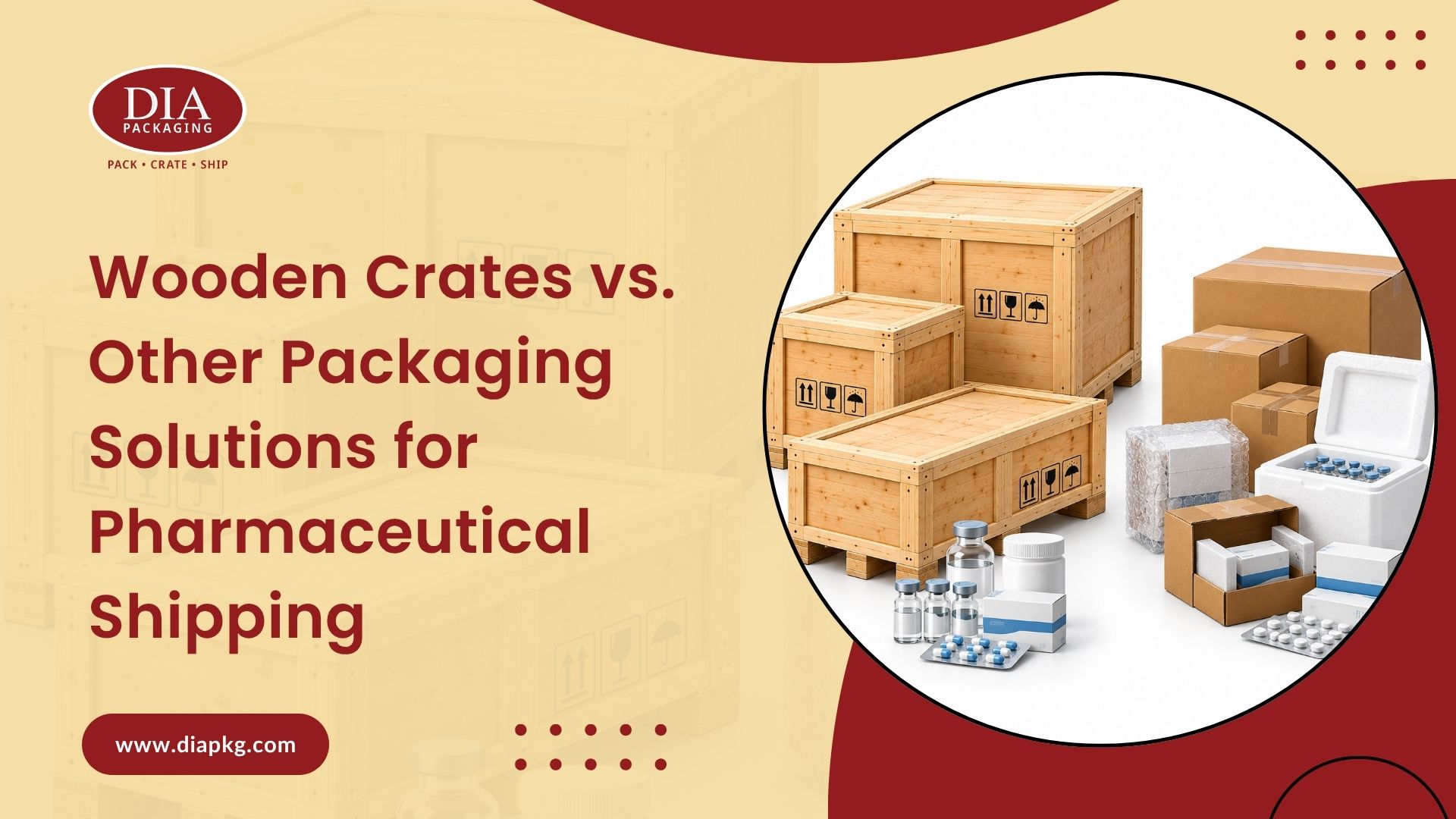
Shipping medicines and other pharmaceutical products is not like shipping regular goods. Many medicines are sensitive to heat, moisture, light, movement, and damage. They must reach their destination in good condition and safe to use.
The packaging used for pharmaceutical shipping plays an important role in this process. Wooden crates are one option, but they are not the only choice. Cardboard boxes, plastic containers, insulated boxes, and special temperature controlled packaging are also widely used.
So, which type of packaging is best? The answer depends on the type of medicine, the distance it needs to travel, the level of protection needed, and the shipping conditions.
What Makes Pharmaceutical Packaging Different?
Pharmaceutical products can be fragile and sensitive. Some medicines can be damaged if they get wet. Others may lose their quality when exposed to high or low temperatures. Glass bottles, vials, syringes, and medical devices can also break if they are handled roughly.
Good packaging needs to protect the product during storage and transport. It should also help prevent contamination, moisture damage, crushing, and other problems.
The right packaging can also make handling easier. When medicines travel across cities or countries, packages may be loaded onto trucks, moved through warehouses, and handled several times before reaching the customer.
This is why choosing the right packaging material matters.
Wooden Crates for Pharmaceutical Shipping
Wooden crates are strong and sturdy containers made from wood. They are often used when products need extra protection during shipping.
One of the biggest benefits of wooden crates is their strength. They can protect heavy or delicate products from bumps and pressure. They are also useful when several smaller packages need to be packed together.
Wooden crates can be made in different sizes. They can also be designed to hold products securely inside. Padding, foam, or other protective materials can be added to reduce movement.
Another benefit is that wooden crates can be useful for long distance shipping. When products are moved by road, rail, sea, or air, strong outer packaging can provide an extra layer of protection.
However, wooden crates also have some limits. Wood is heavier than many other packaging materials. This can increase shipping weight and may raise transportation costs.
Wood can also absorb moisture. If a crate is exposed to rain or high humidity, the wood may become damp. Proper treatment and storage can help reduce this problem.
For international shipping, wooden packaging may also need to meet rules about wood treatment. This is important because untreated wood can carry insects or pests from one country to another.
Cardboard Boxes
Cardboard boxes are one of the most common packaging choices. They are light, easy to handle, and usually cost less than wooden crates.
For smaller pharmaceutical products, cardboard boxes can be a practical choice. Medicines can be placed in inner packs, while the cardboard box provides an outer layer of protection.
Cardboard also takes up less weight during transportation. This can be helpful when many packages need to be shipped at once.
The main weakness of cardboard is that it does not provide the same level of strength as wood. A cardboard box can be crushed if heavy items are placed on top of it. It can also become weak when exposed to water.
For this reason, cardboard boxes may work best when the products do not need heavy protection and the shipping conditions are controlled.
Plastic Containers
Plastic containers are another option for pharmaceutical products. They can be strong, light, and resistant to water.
Some medicines are packed in plastic bottles or containers before being placed inside larger shipping boxes. Plastic can help protect products from moisture and can be easier to clean than wood.
Plastic containers are also available in many shapes and sizes. This makes them useful for different types of products.
However, not all plastic containers provide the same level of protection. Some may crack under strong impact. There are also concerns about plastic waste, so companies need to think about how packaging is used and disposed of.
Insulated Packaging
Some medicines need to stay within a certain temperature range during shipping. In these cases, normal cardboard or wooden crates may not be enough.
Insulated packaging can help keep products at a suitable temperature. These packages may use insulated walls along with cooling materials.
For example, some medicines and vaccines may need to remain cold during transport. An insulated shipping box can help protect them from outside heat.
The advantage of this type of packaging is temperature protection. The disadvantage is that it can cost more and may require careful packing.
The package also needs to be designed for the expected shipping time and outside temperature. A package that works for a short journey may not be suitable for a much longer trip.
Temperature Controlled Containers
For highly sensitive medicines, companies may use special containers that control temperature during transportation.
These systems are designed to keep the products within a set temperature range. They may be used for products that are very sensitive to changes in temperature.
This type of packaging can offer a high level of protection, but it is usually more expensive than basic packaging options. It may also require special equipment and careful monitoring.
For valuable or highly sensitive pharmaceutical products, the extra cost may be worth it because damage to the medicine can be much more expensive.
Wooden Crates vs Other Packaging Options For Pharmaceutical
Each packaging type has its own strengths and weaknesses.
Wooden crates are a strong choice when physical protection is the main concern. They are useful for heavy, large, or fragile items that could be damaged by rough handling.
Cardboard is better when low weight and easy handling are important. It is often suitable for smaller and less fragile products.
Plastic can be useful when moisture resistance and easy cleaning are important.
Insulated packaging is a better choice when temperature needs to be controlled. For medicines that can be damaged by heat or cold, temperature protection may be more important than the strength of the outer package.
In some cases, companies may use more than one type of packaging.
For example, medicine may first be placed in a sealed container, then an insulated box, and finally a strong outer crate.
How to Choose the Right Packaging
There is no single packaging solution that works for every pharmaceutical shipment.
First, consider the product itself. Is it fragile? Does it need protection from moisture? Does it need a controlled temperature?
Next, think about the journey. A short local delivery may need less protection than a shipment traveling across several countries.
The weight and size of the product also matter. Heavy products may need strong wooden crates, while small products may be better suited to cardboard or plastic packaging.
Cost is another factor. The cheapest package is not always the best choice. If poor packaging causes medicines to break or lose their quality, the loss may be much greater than the money saved on packaging.
Shipping rules should also be checked, especially for international transport. Companies need to make sure their packaging meets the required standards.
Final Thoughts
Wooden crates remain a useful choice for pharmaceutical shipping when strong physical protection is needed. They can protect heavy and fragile products during long journeys and rough handling.
However, wooden crates are not always the best option. Cardboard boxes are lighter, plastic containers can offer good moisture resistance, and insulated packaging can help protect medicines that are sensitive to temperature.
The best choice depends on the product and its journey. In many cases, the safest solution is to use several layers of packaging instead of relying on one material.
For pharmaceutical shipping, the main goal is simple: the medicine should arrive safely, in good condition, and ready for use. Choosing packaging based on the product, travel conditions, and required protection can help make that possible.