Choosing the right box may seem simple, but the type of box you use can make a big difference. A good box should protect the product inside, be easy to handle, and match the way you plan to store or ship it.
Two common choices are single wall and double wall RSC boxes. RSC stands for Regular Slotted Container. This is one of the most common box styles used for shipping and storage. It has flaps that meet in the middle when the box is closed.
So, which one should you choose?
The answer depends on what you are packing, how far the box needs to travel, and how much protection your product needs. Let us look at the main differences in simple terms.
What Is a Single Wall RSC Box?
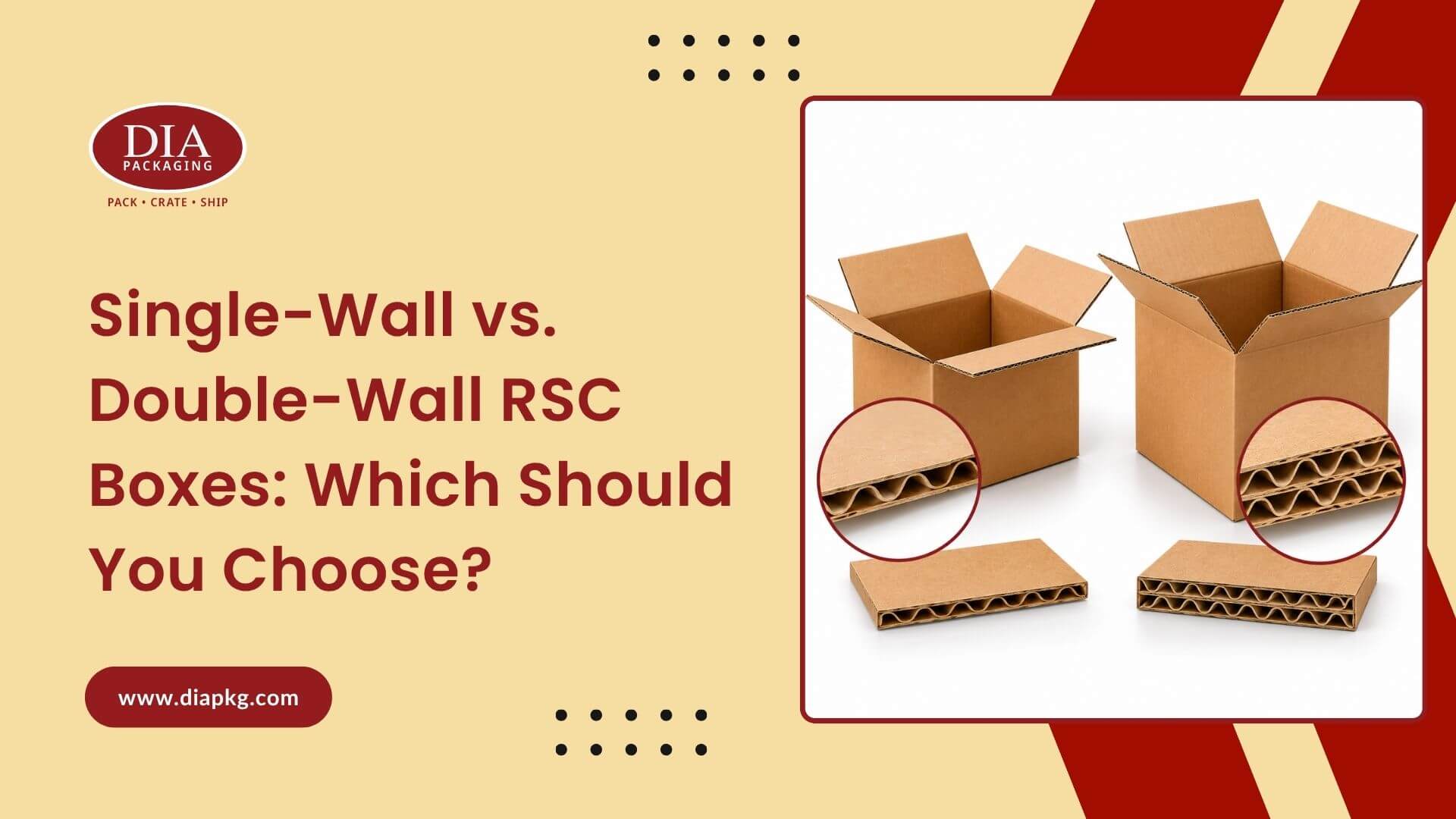
A single wall RSC box is made with one layer of corrugated material between two sheets of paper.
Corrugated material is the wavy layer you can see inside a cardboard box. This wavy layer helps the box stay strong while keeping it light.
Single wall boxes are used for many everyday packing needs. They can hold clothing, books, small household items, food products, office supplies, and many other goods.
One of their biggest benefits is their light weight. Since they use less material, they are usually easier to carry and can help keep shipping weight lower.
Single wall boxes are also a good choice when the item inside is not very heavy or fragile.
What Is a Double Wall RSC Box?
A double wall RSC box has two layers of corrugated material. These layers are placed between three sheets of paper.
Because it has an extra corrugated layer, a double wall box is thicker and stronger than a single wall box.
Double wall boxes are often used for heavier products or items that need more protection. They can also be useful when boxes may be stacked during storage or shipping.
For example, if you are packing tools, machine parts, large appliances, or other heavy items, a double wall box may provide better support.
The extra material does make these boxes heavier and often more expensive than single wall boxes.
Single Wall vs Double Wall: The Main Differences
The biggest difference is strength.
A single wall box has one corrugated layer. A double wall box has two. This gives the double wall box more support and helps it handle greater weight and pressure.
Here are some of the main differences:
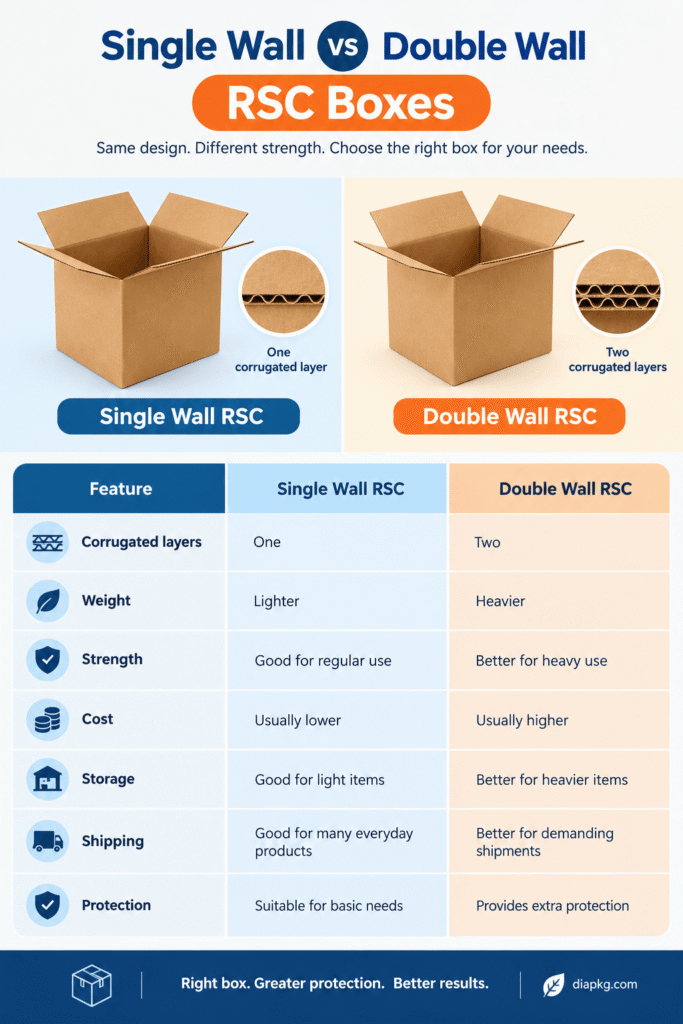
| Feature | Single Wall RSC | Double Wall RSC |
| Corrugated layers | One | Two |
| Weight | Lighter | Heavier |
| Strength | Good for regular use | Better for heavy use |
| Cost | Usually lower | Usually higher |
| Storage | Good for light items | Better for heavier items |
| Shipping | Good for many everyday products | Better for demanding shipments |
| Protection | Suitable for basic needs | Provides extra protection |
These are general differences. The actual strength of a box also depends on the type and thickness of the corrugated material used.
When Should You Choose a Single Wall Box?
A single wall RSC box can be a good choice when you need a simple box for everyday packing.
It may work well when:
-
The product is light or medium weight.
-
The product is not very fragile.
-
The box will not be stacked under heavy loads.
-
The package does not need extra protection.
-
You want to keep packaging costs lower.
-
You need a box that is easy to carry.
For example, imagine you are shipping a few T-shirts to a customer. A single wall box may provide all the protection you need.
The same may be true for books, toys, small home products, or other items that are not especially heavy.
Using a stronger box than needed is not always helpful. If a lighter box can safely protect the product, it may be the more practical choice.
When Should You Choose a Double Wall Box?
A double wall RSC box is useful when the package needs more strength and support.
It may be a better fit when:
- The product is heavy.
- The product is fragile or valuable.
- Boxes will be stacked during storage.
- The package may face rough handling.
- The shipment will travel a long distance.
- The box needs to hold a large or bulky product.
For example, think about shipping a heavy metal part. A thin box may bend or lose its shape under the weight. A double wall box can provide more support.
Double wall boxes can also be useful when several boxes are placed on top of one another. The stronger walls can help the lower boxes handle more pressure.
Does Double Wall Always Mean Better?
Not necessarily.
A double wall box is stronger, but that does not mean it is the right choice for every product.
If you are packing a light item that does not need much protection, using a double wall box may add weight and cost without giving you much extra benefit.
The goal is to choose a box that gives enough protection for the product. You do not always need the strongest box available.
It is also important to remember that box strength depends on more than just the number of walls. The thickness and quality of the materials, the size of the box, and how the box is packed can all affect its performance.
Think About Shipping Conditions
Where and how the box will travel also matters.
A box that works well for a short local delivery may face different conditions during a long shipment. Packages can be moved several times, placed in storage areas, stacked with other packages, or exposed to changes in temperature and moisture.
If your package will go through many handling steps, extra protection may be useful.
For local deliveries of light products, a single wall box may be enough. For heavy products or shipments that need more support, a double wall box may be a better fit.
What About Cost?
Cost is another important point.
Single wall boxes usually use less material, so they often cost less than double wall boxes. They are also lighter, which can be useful when shipping costs depend on package weight.
Double wall boxes usually cost more because they use more material. They are also heavier.
However, the cheapest box is not always the least expensive choice in the long run. If a box is too weak and the product gets damaged, you may face replacement, return, or customer service costs.
The right choice is a box that protects the product without using more material than needed.
How Do You Make the Right Choice?
Start by looking at the product.
Ask yourself a few simple questions:
- How heavy is the product?
- Is it fragile?
- Will several boxes be stacked?
- How far will the box travel?
- Will the package be handled many times?
- Does the product need extra protection?
- Can a single wall box safely hold it?
If the product is light and does not need much protection, a single wall RSC box may be enough.
If the product is heavy, fragile, bulky, or likely to face more pressure during shipping and storage, consider a double wall RSC box.
It is also a good idea to test the box before using it for a large number of shipments. Put the product inside, close the box properly, and see how it handles normal lifting, movement, and stacking.
Final Thoughts
Both single wall and double wall RSC boxes have their place.
Single wall boxes are lighter, easier to handle, and usually less expensive. They are suitable for many everyday products and basic shipping needs.
Double wall boxes offer extra strength and support. They are a useful choice for heavier products, fragile items, and shipments that may face more handling or stacking.
The best choice is not simply the strongest box. It is the box that gives your product the right level of protection for the job.
Before choosing, consider the product weight, size, fragility, shipping distance, storage conditions, and cost. When you match the box to the product, you can protect your goods while avoiding unnecessary packaging.