When it comes to shipping goods, choosing the right packaging is important. The package needs to protect the product during loading, transport, and unloading. It should also be strong enough to handle bumps, movement, and changes in weather.
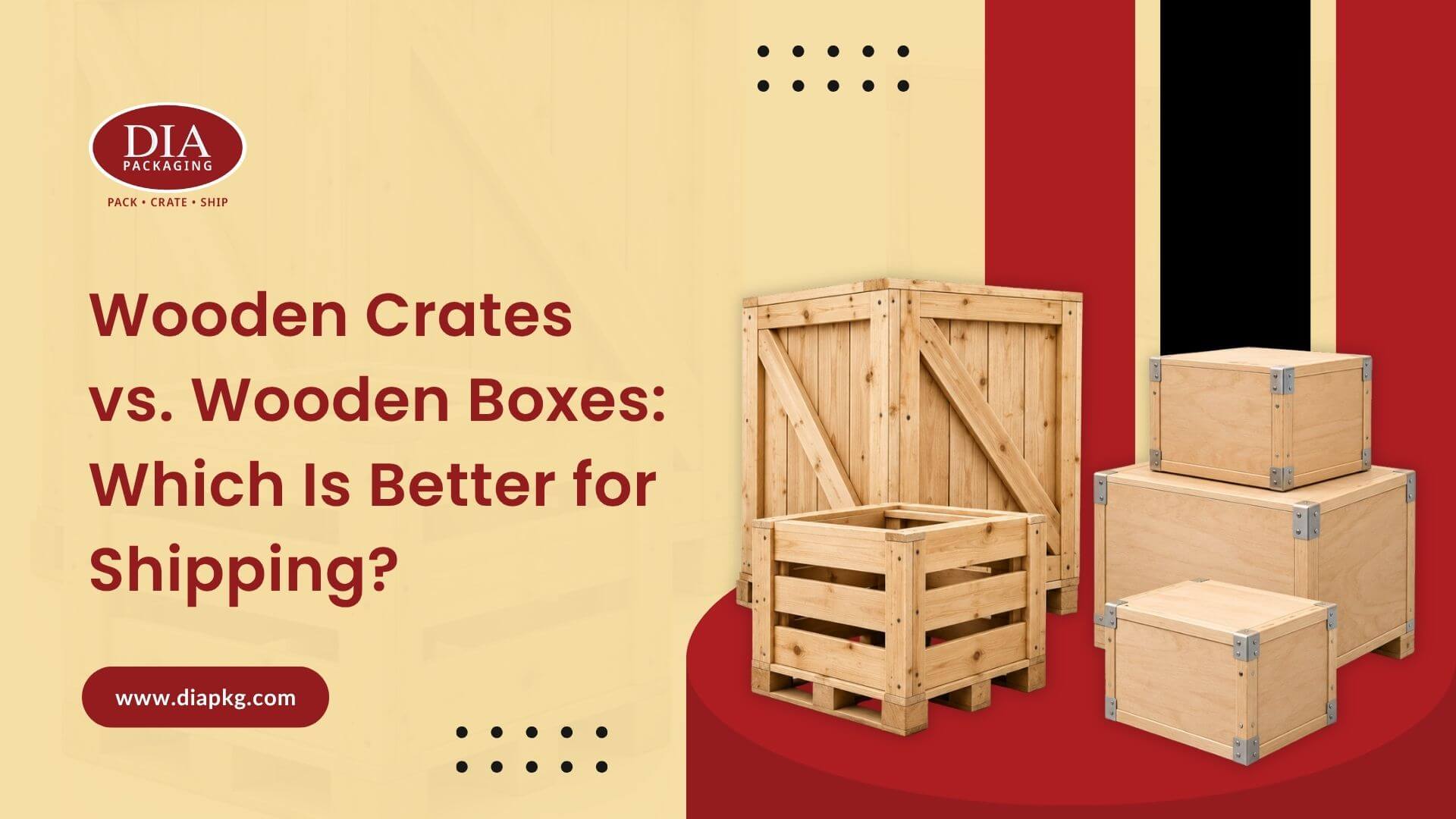
Two common options are wooden crates and wooden boxes. Both are made from wood, but they are built in different ways. A wooden crate usually has an open frame or slatted sides. A wooden box has solid wooden panels that fully cover the product.
So, which one is better for shipping?
The answer depends on what you are shipping, how far it needs to travel, and how much protection it needs.
What Is a Wooden Crate?
A wooden crate is a strong wooden frame used to hold and protect goods. Its sides may have spaces between the wooden slats. This makes the crate lighter and allows people to see the product inside.
Crates are often used for large or heavy items such as machines, equipment, furniture, and industrial parts. They can also be made to fit the shape and size of a particular product.
One of the main benefits of a crate is that it gives good support without using as much wood as a fully closed box. This can help reduce the weight of the package.
However, because some crates have open spaces, they may not protect goods from dust, water, or dirt as well as a closed wooden box.
What Is a Wooden Box?
A wooden box is a closed container made with wooden panels. The panels cover the sides, top, and bottom of the package. This gives the product more protection from the outside.
Wooden boxes are often used for products that need extra care during shipping. They can be used for delicate equipment, valuable goods, glass items, and products that need protection from dust or moisture.
The inside of the box can also be fitted with foam, paper, padding, or wooden supports. These materials help stop the product from moving around during transport.
Because wooden boxes are fully covered, they usually use more wood than crates. This can make them heavier and sometimes more costly.
Wooden Crates vs Wooden Boxes
Both options have their own strengths. Here are some key differences to consider.
1. Protection
Protection is one of the biggest differences between the two.
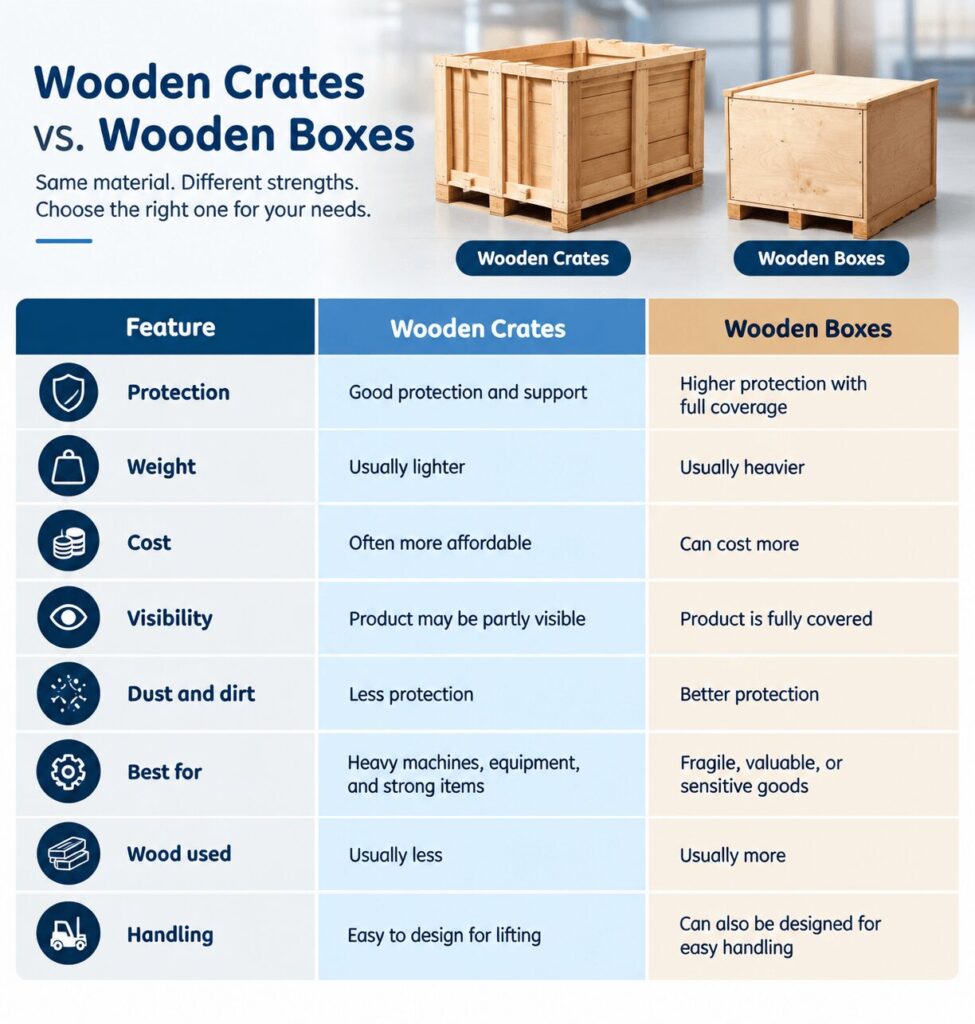
A wooden box gives full coverage around the product. This makes it a good choice when the item needs protection from dust, dirt, rain, or rough handling.
A wooden crate gives strong support but may leave some parts of the product exposed. It can protect against bumps and impacts, but it may not provide the same level of coverage as a closed box.
For fragile or sensitive products, a wooden box may be more suitable.
2. Weight
The weight of packaging can affect shipping costs.
Wooden crates often use less wood because they do not always have solid panels on every side. As a result, they can be lighter than wooden boxes of the same size.
Wooden boxes have more wooden material, so they can be heavier. The final weight also depends on the type and thickness of wood used.
If keeping the package light is important, a crate may be worth considering.
3. Strength
Both wooden crates and wooden boxes can be very strong when built correctly.
A crate is useful when the main goal is to hold a large or heavy item in place. The wooden frame can give the product good support while making it easier to handle.
A wooden box has solid walls that can offer an extra layer of protection. It is especially useful when the package may be stacked with other goods.
The strength of either option depends on how it is designed and built. A poorly made crate or box may not protect the product properly.
4. Cost
Cost is another factor to consider.
Wooden crates can sometimes cost less because they use less wood and may take less material to build. They can also be a practical choice for large items that do not need full coverage.
Wooden boxes may cost more because they require more wood and additional work. However, the extra cost may be useful when the product needs stronger protection.
It is important to look at the value of the product, not only the cost of the packaging. Saving money on packaging is not helpful if the product gets damaged during shipping.
5. Handling and Loading
Both crates and boxes can be designed for easy handling.
For heavy products, a crate can be built with a strong base that allows lifting equipment to move it safely. A box can also have a similar base.
The size and weight of the package should always be considered before shipping. Very large or heavy packages may need special handling.
Clear labels can also help workers know how the package should be moved. Labels such as “This Side Up” or “Handle With Care” can provide simple instructions.
When Should You Choose a Wooden Crate?
A wooden crate may be a good choice when you are shipping large, strong, or heavy items that do not need to be fully covered.
For example, crates can be useful for:
- Heavy machines
- Industrial equipment
- Large furniture
- Metal parts
- Construction equipment
- Large tools
- Products that need ventilation
A crate is also useful when you want workers to be able to see the product without opening the package.
When Should You Choose a Wooden Box?
A wooden box may be better when the product needs more protection from outside conditions.
Wooden boxes can be useful for:
- Fragile equipment
- Glass products
- Electronic items
- Valuable goods
- Sensitive machine parts
- Products that need protection from dust
- Items that may be shipped over long distances
The inside of the box can also be designed to keep the product from moving. This can lower the chance of damage during transport.
What About Long Distance Shipping?
For long distance shipping, the packaging may face many different conditions. The goods may be loaded and unloaded several times. They may also spend time in trucks, ships, warehouses, or storage areas.
A wooden box can offer better overall coverage in these situations. It can help protect the product from dirt and contact with other goods.
However, a wooden crate can also work well when the product is strong and does not need full coverage. The right choice depends on the product and shipping conditions.
How to Make the Right Choice?
Before choosing between a crate and a box, ask a few simple questions.
1. Is the product fragile?
If yes, a wooden box may provide better protection.
2. Is the product large and heavy?
A wooden crate may be a practical option if the item does not need full coverage.
3. Does the product need protection from dust or water?
A closed wooden box may be more suitable.
4. Will the package be stacked?
Choose packaging that is strong enough to support the expected load.
5. How far is the product traveling?
Long journeys may require more protection, especially when goods are handled many times.
6. What is the shipping budget?
A crate may use less material, while a box may cost more but provide greater protection.
Final Thoughts
There is no single answer to which is better, wooden crates or wooden boxes. Each option serves a different purpose.
Wooden crates are often a good choice for large, heavy, and strong products that need support but do not need to be fully covered. They can also be lighter and use less wood.
Wooden boxes provide more complete coverage. They are often a better fit for fragile, valuable, or sensitive products that need extra protection during shipping.
The best packaging is the one that keeps the product safe while also making sense for its size, weight, travel distance, and handling needs.
Before shipping, take time to understand what your product needs. A little planning can help prevent damage and make the entire shipping process easier.