Packaging and storage play a major role in how businesses move, protect, and organize products. As supply chains become more complex and customer expectations continue to rise, companies need packaging solutions that are both practical and adaptable. This is where modular corrugated designs offer a significant advantage.
Modular corrugated packaging uses standardized components that can be combined, adjusted, or configured in different ways to meet specific storage and shipping needs.
Instead of relying on a large variety of box sizes and packaging formats, businesses can use a flexible system that simplifies operations while maintaining product protection.
From warehouses and distribution centers to retail environments and e-commerce fulfillment, modular corrugated designs help improve efficiency, reduce waste, and streamline inventory management. Understanding how these systems work can help businesses make smarter packaging decisions and improve overall productivity.
What Are Modular Corrugated Designs?
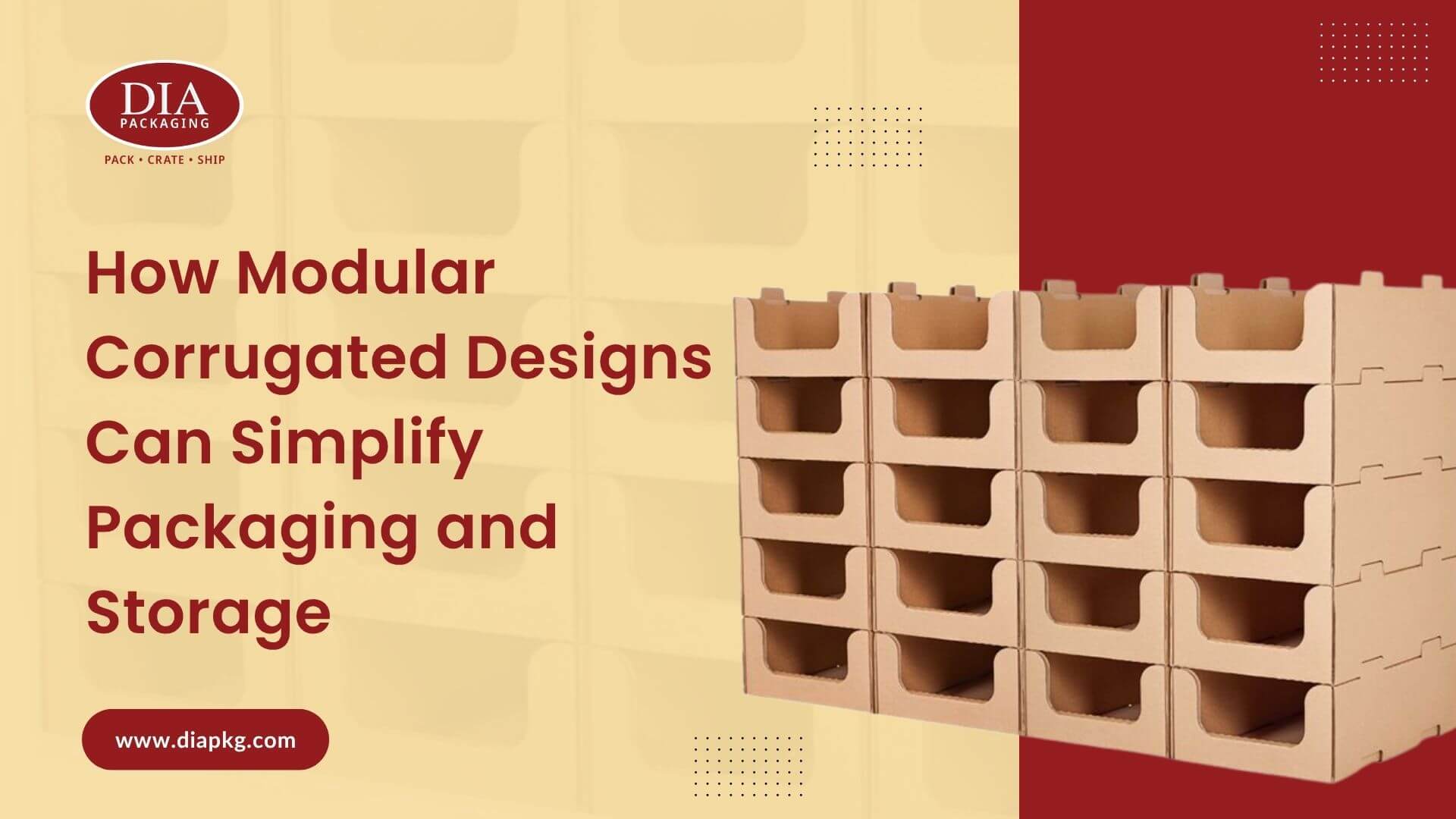
Modular corrugated designs refer to packaging systems built around standardized dimensions and interchangeable components. These designs allow different packaging elements to fit together in a consistent and organized way.
Unlike traditional packaging that often requires unique box sizes for different products, modular systems focus on compatibility and flexibility.
A set of standardized corrugated containers can accommodate a wide range of products while maintaining efficient use of space.
Common features of modular corrugated packaging include:
- Standardized dimensions
- Stackable structures
- Interchangeable inserts and dividers
- Flexible sizing options
- Easy assembly and storage
- Efficient pallet compatibility
This approach creates a more organized packaging system that supports both storage and transportation requirements.
Why Corrugated Material Works Well for Modular Packaging
Corrugated material offers a unique combination of strength, durability, and versatility. It consists of a fluted layer sandwiched between linerboards, creating a structure that can absorb impacts while remaining lightweight.
These characteristics make corrugated packaging an ideal choice for modular designs because it can be easily customized without sacrificing performance.
Key advantages include:
- High strength-to-weight ratio
- Excellent cushioning properties
- Cost-effective manufacturing
- Recyclable and sustainable material
- Easy customization options
- Reliable stacking performance
Because corrugated packaging can be produced in various sizes and strengths, manufacturers can create modular systems that meet a wide range of storage and shipping requirements.
Simplifying Inventory Management
One of the biggest challenges in packaging operations is managing a large inventory of box sizes and packaging materials. Maintaining dozens of different packaging formats can create unnecessary complexity and increase storage costs.
Modular corrugated designs help solve this problem by reducing the number of packaging variations needed.
When businesses use standardized packaging components, they can:
- Simplify inventory tracking
- Reduce storage space requirements
- Lower procurement costs
- Improve forecasting accuracy
- Reduce the risk of stock shortages
Warehouse teams also benefit from faster identification and selection of packaging materials. Instead of searching through multiple packaging options, workers can quickly choose from a smaller set of standardized solutions.
This streamlined approach helps improve operational efficiency across the entire supply chain.
Improving Storage Efficiency
Storage space is a valuable resource in warehouses, fulfillment centers, and retail stockrooms. Poorly sized packaging can lead to wasted space and inefficient organization.
Modular corrugated designs address this issue by creating consistent dimensions that fit together efficiently. Boxes can be stacked more effectively, resulting in better use of available storage capacity.
Benefits of improved storage efficiency include:
- Better warehouse organization
- Increased storage density
- Easier inventory access
- Reduced clutter
- Improved workflow
Standardized packaging dimensions also make it easier to plan shelving layouts and storage systems. Teams can maximize available space while maintaining easy access to products.
As businesses grow, this level of organization becomes increasingly important for maintaining efficient operations.
Enhancing Pallet Utilization
Pallet efficiency has a direct impact on transportation and storage costs. When packaging dimensions are inconsistent, empty spaces often appear between boxes, reducing the effectiveness of pallet loads.
Modular corrugated packaging is often designed around pallet dimensions. This allows boxes to fit together with minimal wasted space.
Better pallet utilization can provide several advantages:
- More products per shipment
- Improved load stability
- Reduced transportation costs
- Lower risk of product damage
- Faster loading and unloading
By optimizing how products fit on pallets, businesses can move goods more efficiently throughout the supply chain.
Supporting Faster Packaging Operations
Speed matters in modern fulfillment environments. Whether shipping products to retailers or directly to consumers, businesses need packaging processes that support quick and accurate order fulfillment.
Modular corrugated systems simplify packaging operations by providing standardized packaging options that workers can easily recognize and assemble.
This consistency helps reduce:
- Packaging errors
- Training time
- Material selection delays
- Packing complexity
Employees become familiar with the packaging system more quickly, leading to smoother workflows and increased productivity.
In high-volume operations, even small improvements in packaging speed can result in significant time savings over the course of a year.
Reducing Packaging Waste
Many businesses struggle with excess packaging waste caused by oversized boxes or unnecessary packaging materials. This issue can increase costs and create environmental concerns.
Modular corrugated designs help minimize waste by providing packaging solutions that fit products more effectively.
When packaging dimensions are carefully planned, companies often use:
- Less corrugated material
- Fewer void-fill materials
- Fewer packaging components
- Less warehouse storage space
Reducing waste not only lowers material costs but also supports sustainability goals that many organizations prioritize today.
Because corrugated materials are widely recyclable, modular packaging systems can contribute to more environmentally responsible operations.
Increasing Product Protection
Packaging must protect products throughout storage, handling, and transportation. A damaged product can lead to returns, replacement costs, and customer dissatisfaction.
Modular corrugated designs improve protection through consistency and structural reliability. Standardized packaging dimensions make it easier to develop tested packaging solutions that perform well under real-world conditions.
Protective features may include:
- Custom inserts
- Corrugated dividers
- Reinforced corners
- Cushioning components
- Secure stacking configurations
These elements help reduce movement inside the package and improve overall product security.
Because modular systems are designed around repeatable standards, businesses can maintain consistent protection across multiple product categories.
Adapting to Changing Business Needs
Business requirements often change over time. Product lines expand, order volumes increase, and customer expectations evolve. Packaging systems must be flexible enough to adapt without requiring a complete redesign.
Modular corrugated packaging offers this flexibility by allowing businesses to adjust configurations while maintaining a consistent packaging framework.
Companies can:
- Introduce new product sizes
- Expand inventory efficiently
- Scale operations more easily
- Support seasonal demand changes
- Improve fulfillment flexibility
This adaptability helps businesses remain responsive in competitive markets while avoiding unnecessary packaging complexity.
Supporting E-Commerce Growth
The rise of e-commerce has increased demand for packaging that is efficient, protective, and easy to manage.
Modular corrugated systems are particularly valuable in e-commerce environments because they help fulfillment teams package a wide range of products using a smaller number of packaging formats.
Advantages for e-commerce operations include:
- Faster order processing
- Better inventory control
- Improved shipping efficiency
- Reduced packaging costs
- Consistent customer experience
As online sales continue to grow, businesses need packaging solutions that support both operational efficiency and product protection. Modular corrugated designs offer a practical way to achieve both goals.
Conclusion
Modular corrugated designs provide a smarter approach to packaging and storage by combining flexibility, efficiency, and reliability. Through standardized dimensions and interchangeable components, these systems simplify inventory management, improve storage organization, and support faster packaging operations.
They also help businesses reduce waste, improve pallet utilization, enhance product protection, and adapt to changing operational demands. Whether used in manufacturing, warehousing, retail, or e-commerce, modular corrugated packaging creates a more streamlined and scalable packaging strategy.
As companies continue to look for ways to improve efficiency while controlling costs, modular corrugated designs remain an effective solution for simplifying packaging and storage across the supply chain.