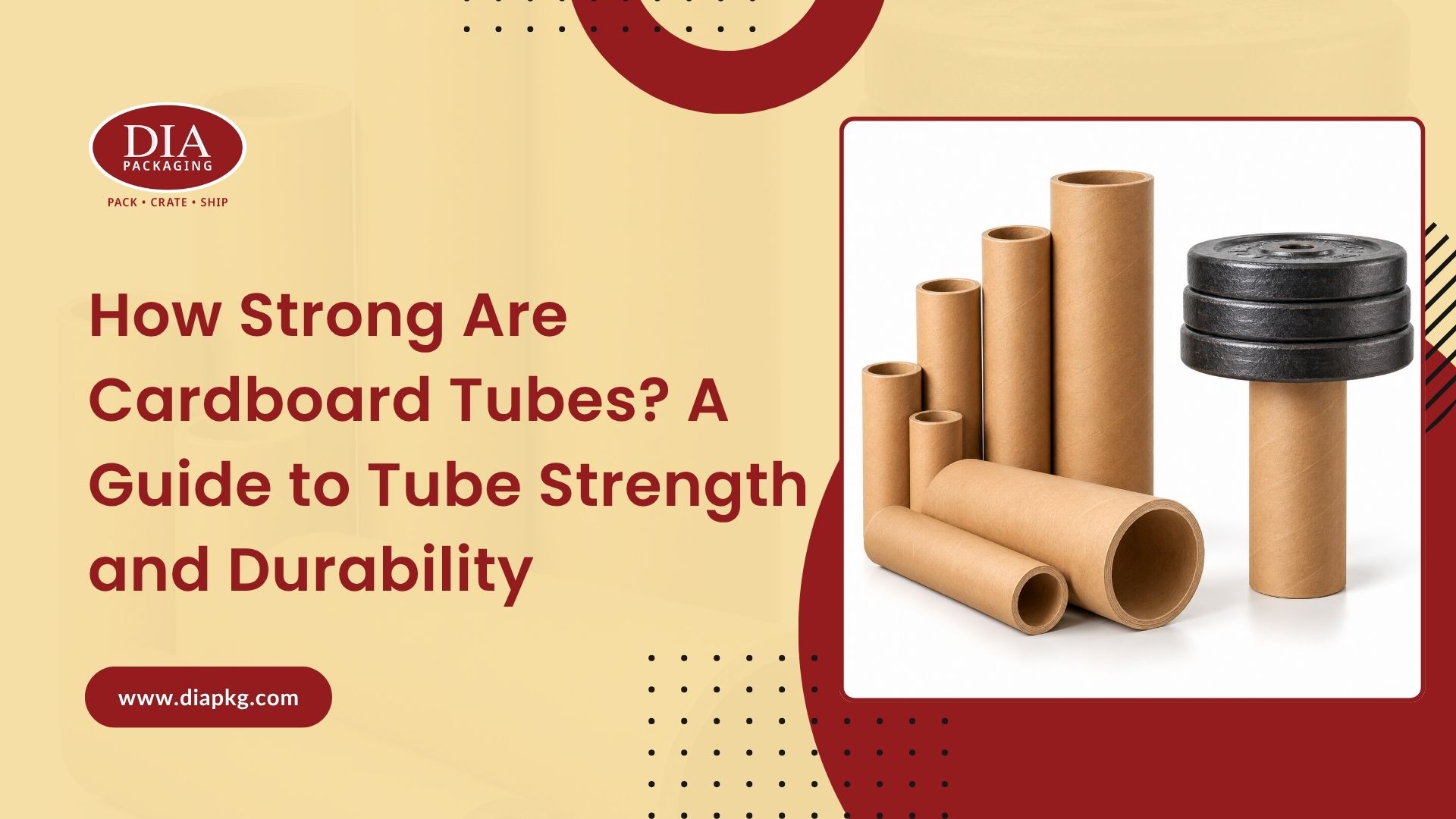
Cardboard tubes may look simple, but they can be surprisingly strong. You can find them inside paper rolls, packaging, mailing tubes, fabric rolls, and many other products. They are light, easy to handle, and often made from recycled paper.
But how much weight can a cardboard tube really hold? Can it bend or break? What makes one tube stronger than another?
The answer depends on several things, including the tube’s size, thickness, shape, paper type, and how it is used. Understanding these factors can help you choose the right cardboard tube for your needs.
What Makes Cardboard Tubes Strong?
A cardboard tube is made by wrapping layers of paper around a round shape. The layers are joined together with glue. Some tubes have only a few layers, while others have many.
The round shape is one of the main reasons tubes can be strong. When weight is placed on a round tube, the force spreads around the curved surface. This helps the tube handle more pressure than a flat sheet of cardboard with the same amount of material.
Think about an empty cardboard box. If you press down on its flat side, it can bend easily. A tube is different because its curved walls help spread the pressure.
The number of paper layers also matters. A tube with thick walls is usually stronger than one with thin walls. The quality of the paper and the glue used between layers can also affect strength.
How Much Weight Can a Cardboard Tube Hold?
There is no single answer because cardboard tubes come in many sizes and types.
A small tube used for a paper towel may not hold much weight. A thick industrial tube made with several layers of strong paper can support a much heavier load.
The way the weight is placed also makes a big difference. A tube standing upright can often carry more weight than the same tube lying on its side. When a tube stands upright, the weight travels down through the walls toward the ground.
For example, imagine standing on an empty cardboard tube. If the tube is thick, round, and standing straight, it may support a surprising amount of weight. But if the tube has a dent or is placed at an angle, it may collapse much more easily.
This is why there is no simple rule such as “one cardboard tube can hold 20 kilograms.” The actual strength must be checked based on the tube’s design and use.
Tube Thickness Matters
One of the easiest ways to improve the strength of a cardboard tube is to make its walls thicker.
A thick tube has more layers of paper to help carry the load. It is also less likely to bend when pressure is placed on it.
For example, compare two tubes that are the same length and width. One has thin walls, while the other has thick walls. The thick tube will usually be better at handling heavy loads.
However, thicker does not always mean better for every job. A thick tube uses more paper, so it can cost more and weigh more. For light jobs, a thinner tube may be the better choice.
Tube Size and Shape
The size of a cardboard tube also affects how strong it is.
Long tubes can be more likely to bend or buckle than short tubes. This happens because a long tube has more space between the points where it is supported.
The tube’s diameter matters too. A wider tube can spread weight over a larger area. But its strength also depends on wall thickness and the type of paper used.
The shape of the tube is another important factor. Round tubes are common because their shape spreads pressure well. Some tubes are made in square, oval, or other shapes for special uses. Their strength can be different from that of a round tube.
The Quality of the Paper
Not all cardboard is made the same way.
Some cardboard tubes use strong paper that is made to handle pressure and heavy loads. Others are made from lighter paper for simple jobs.
The paper may also have different levels of thickness and stiffness. Stronger paper can help a tube keep its shape when it is squeezed or loaded.
Recycled paper is often used to make cardboard tubes. Recycled materials can still make strong tubes, especially when several layers are joined together correctly.
The quality of the paper should match the job. A tube for holding wrapping paper does not need the same strength as a tube used to support a heavy roll of material.
Glue and Layering
The glue between the paper layers plays an important role too.
A cardboard tube is often made by wrapping paper around a central shape again and again. Glue holds these layers together. If the layers stay firmly connected, they work together as one strong wall.
If the glue is weak or the layers are not joined properly, the tube may split or come apart under pressure.
This is why the way a tube is made can be just as important as the paper itself. A well-made tube with several strong layers can last much longer than a poorly made tube with similar materials.
Moisture Can Weaken Cardboard Tubes
Water and moisture are among the biggest problems for cardboard tubes.
Paper absorbs water. When a cardboard tube becomes wet, its paper fibers can become weaker and softer. The glue between the layers may also lose some of its strength.
A tube that is strong when dry may bend or collapse when it becomes wet.
For this reason, cardboard tubes should be kept away from rain, spills, and damp storage areas when possible. Some tubes can be treated to make them more resistant to moisture, but ordinary cardboard should not be expected to stay strong when soaked.
Dents and Damage Reduce Strength
A cardboard tube does not need to be completely broken to lose strength.
Even a small dent can change how the tube handles weight. A damaged area may become a weak point. When pressure is added, the tube may start to bend or collapse at that spot.
Cuts, tears, crushed ends, and cracks can also reduce strength.
This is why tubes used for shipping or storage should be checked before use. A tube that looks badly damaged may not protect its contents or carry a load safely.
How Long Do Cardboard Tubes Last?
The life of a cardboard tube depends on where and how it is used.
A tube kept indoors in a dry place can last for a long time. A tube exposed to water, high humidity, heavy pressure, or rough handling may wear out much faster.
Storage also matters. Tubes should be kept flat or supported in a way that prevents bending. Heavy items should not be placed on top of thin tubes for long periods unless the tubes were designed for that purpose.
With proper storage and careful use, cardboard tubes can be both useful and durable.
Choosing the Right Cardboard Tube
When choosing a cardboard tube, think about the job it needs to do.
Ask yourself:
- How much weight will the tube need to carry?
- Will the tube stand upright or lie on its side?
- How long does the tube need to be?
- Will it be exposed to water or moisture?
- Does it need thick or thin walls?
- Will it face pressure, bending, or rough handling?
For light tasks, a basic cardboard tube may be enough. For heavy loads, look for a tube with thicker walls, strong paper, and good layer bonding.
Final Thoughts
Cardboard tubes may be light, but their round shape and layered construction can give them impressive strength. Their ability to carry weight depends on many factors, including wall thickness, tube length, diameter, paper quality, glue, and how the tube is used.
Keeping tubes dry and free from dents can also help them stay strong for longer.
The most important thing to remember is that there is no single strength rating for all cardboard tubes. A small paper tube and a heavy-duty industrial tube may look similar, but they can have very different levels of strength.
When you understand what affects tube strength, it becomes much easier to choose the right tube for the job.