When people think about packaging, one common belief quickly comes to mind. Heavier boxes mean better protection. This idea has been around for a long time, especially in shipping and storage. As businesses try to cut costs and reduce waste, lightweight boxes are becoming more popular. Still, many people remain unsure if lighter boxes can really protect products well.
This article clears up the confusion. We will look at common myths about lightweight boxes and compare them with real facts. The goal is to explain everything in simple language so anyone can understand how lightweight boxes work and when they are the right choice.
Why packaging weight matters
Packaging does more than just hold an item. It protects goods from damage, keeps them clean, and helps them arrive safely at their destination. At the same time, packaging adds weight. More weight often means higher shipping costs and more strain during handling.
Lightweight boxes reduce extra weight while still doing their job. Many industries such as food delivery, electronics, retail, and online shopping use them widely. They are widely used in industries such as food delivery, electronics, retail, and online shopping. Even with their growing use, many people still question their strength.
Myth #1: Lightweight boxes are weak
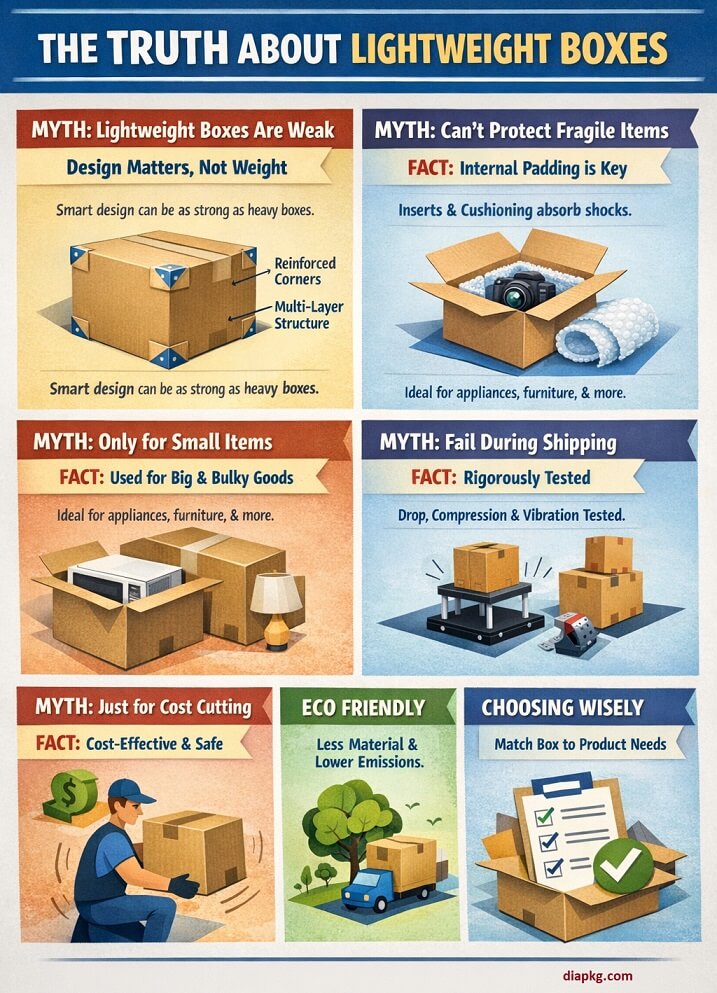
This is the most common myth. Many assume that if a box feels light, it must be fragile. In reality, weight alone does not decide strength.
Modern lightweight boxes are made using smart designs and high quality materials. Engineers study how pressure moves through a box and adjust the structure to handle loads better. Strong corners, reinforced edges, and well planned folds can make a big difference.
A lightweight box can often carry the same weight as a heavier one if designers build it properly. The strength comes from the box’s design, not from how heavy it feels in your hands. The strength comes from how the box is built, not how heavy it feels in your hands.
Fact: Design plays a bigger role than weight
The shape and structure of a box are critical. Boxes with well designed flutes and layers can absorb shock and resist crushing. Some lightweight boxes use multiple thin layers instead of one thick layer. This helps spread pressure evenly.
Think of it like a bridge. A well designed bridge can support heavy traffic even if it does not look bulky. The same idea applies to packaging.
Myth #2: Lightweight boxes cannot protect fragile items
Another common fear is that delicate products need thick and heavy packaging to stay safe. While protection is important, heavier does not always mean safer.
Fragile items break because of sudden movement, drops, or pressure. Lightweight boxes can handle these risks when combined with proper internal support. Inserts, padding, and snug fits matter more than box weight.
Fact: Internal support makes the real difference
Cushioning materials like paper padding, molded inserts, or air filled pockets help absorb shocks. When an item does not move inside the box, the risk of damage drops greatly.
Lightweight boxes work best when they are the right size for the product. Extra empty space can cause movement, which leads to damage. A well fitted lightweight box with good padding can protect fragile items just as well as heavier packaging.
Myth #3: Lightweight boxes are only for small items
Some people think lightweight boxes are only suitable for small or low value products. This is not true.
Many lightweight boxes are used for large items such as appliances, furniture parts, and bulk orders. The key is choosing the right grade and structure for the load.
Fact: Lightweight does not mean limited use
Manufacturers offer lightweight boxes in many strength levels. Some are designed to handle stacking, long-distance shipping, and rough handling. Although these boxes may look simple, engineers test them to meet specific weight and pressure standards.
As long as you choose the box based on the product’s needs, size, and shipping conditions, lightweight options can work for many different uses.
Myth #4: Lightweight boxes fail during shipping
Shipping can be rough. Boxes are stacked, dropped, and sometimes exposed to moisture. This leads to the belief that lightweight boxes will fail under these conditions.
Fact: Proper testing ensures performance
Most quality lightweight boxes go through strict testing. This includes compression tests, drop tests, and vibration tests. These checks help make sure the box can survive real world shipping.
Problems usually occur when the wrong box is used for the job. For example, using a box meant for short local delivery in long distance shipping can lead to damage. The issue is not the weight of the box, but the mismatch between box and purpose.
Myth #5: Lightweight boxes are a cost cutting risk
Some believe lightweight packaging is chosen only to save money, even if it risks product safety.
Fact: Lightweight boxes balance cost and protection
Yes, lightweight boxes often cost less to ship because of reduced weight. But they are not just about saving money. They are about smart design and efficiency.
Using the right box reduces material waste, lowers fuel use during transport, and improves handling speed. When done correctly, this does not increase damage rates. In many cases, it improves them.
How lightweight boxes improve handling
Lighter boxes are easier for workers to lift and move. This reduces the risk of drops caused by fatigue. It also lowers the chance of workplace injuries.
Better handling often leads to fewer accidents. When boxes are easier to manage, they are less likely to be mishandled or thrown.
Environmental benefits people often overlook
While protection is the main concern, it is worth noting the environmental side. Lightweight boxes use less raw material. This means fewer trees cut and less energy used in production.
They also take up less space during transport. More boxes can fit in one shipment, reducing the number of trips needed. Over time, this has a real impact on emissions.
Choosing the right lightweight box
Maximizing protection with lightweight boxes depends on making the right choices. Here are a few simple tips.
First, match the box size to the product. Avoid extra space. Second, choose the correct strength rating for the item weight. Third, use proper internal padding. Fourth, consider the shipping distance and handling conditions.
Working with a packaging supplier who understands your product can make this process easier.
When heavier boxes may still be needed
Lightweight boxes are not the answer for every situation. Extremely heavy items, sharp objects, or products exposed to harsh conditions may still need thicker packaging.
The key is not to assume heavier is always better. It is about finding the right balance between protection, cost, and efficiency.
Final thoughts
Lightweight boxes have come a long way. Many myths around them come from outdated ideas about packaging. Today, strength comes from smart design, proper materials, and correct usage, not just weight.
When chosen carefully, lightweight boxes can offer excellent protection, lower costs, improve handling, and reduce environmental impact. Understanding the facts helps businesses and individuals make better packaging decisions without unnecessary fear.
In the end, protection is about how well a box does its job, not how heavy it feels.