Corrugated boxes are used to pack and ship many things, from clothes and books to food, toys, and electronic items. But not all boxes are equally strong. Some are made for light products, while others are built to carry heavy items or handle long trips.
If you are choosing boxes for your business, you may have come across the term ECT rating. You might wonder what it means and how to choose the right one for your products.
The good news is that choosing the right ECT rating does not have to be difficult. Once you understand what it means, you can make a better choice, protect your products, and avoid spending money on boxes that are stronger than you need.
What Is an ECT Rating?
ECT stands for Edge Crush Test. It is a test that measures how well the edges of corrugated cardboard can handle pressure.
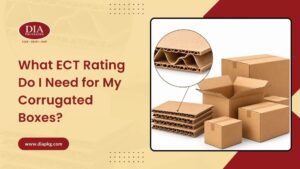
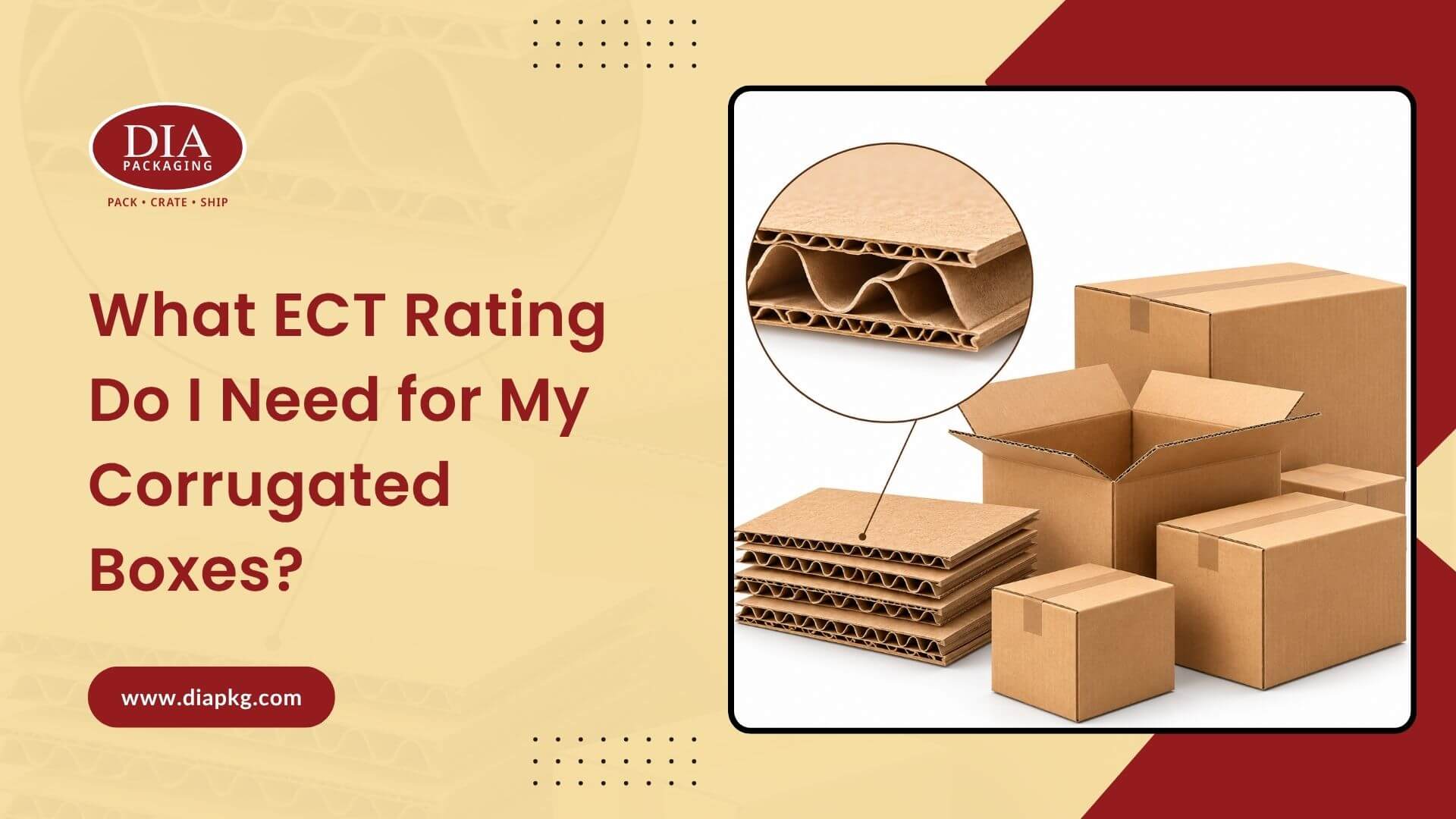
Corrugated cardboard is made from layers of paper. It usually has a wavy layer of paper between two flat sheets. This design helps make the box strong while keeping it light.
During an Edge Crush Test, a small piece of cardboard is placed upright and pressed down from the top. The test measures how much pressure it can take before it starts to bend or crush.
The result is called the ECT rating. In the United States, it is usually shown as a number followed by ECT, such as 32 ECT or 44 ECT.
A higher ECT rating generally means the cardboard can handle more pressure along its edges. However, it does not mean the box is best for every product or every shipping situation.
Common ECT Ratings and Their Uses
Different boxes need different levels of strength. Here are some common ECT ratings and when they may be useful.
|
ECT rating |
Common use |
|---|---|
|
23 ECT |
Lightweight products and small packages |
|
29 ECT |
Light to medium weight products |
|
32 ECT |
Everyday shipping and online orders |
|
44 ECT |
Heavier products and boxes that need extra strength |
|
48 ECT and above |
Heavy goods, large loads, and demanding shipping needs |
These are general examples, not fixed rules. The right rating also depends on the size of the box, the type of cardboard, and how the boxes will be stored and moved. Always check the box maker’s stated limits before choosing a rating.
How Do You Choose the Right ECT Rating?
There is no single ECT rating that works for every box. To make the right choice, think about the following points.
1. Check the Weight of Your Product
The weight of your product is a good place to start. A box carrying a few T-shirts does not need the same strength as a box carrying metal parts.
For example, a small business shipping light clothing may find that a standard 32 ECT box works well. A business shipping heavier tools may need a stronger box, such as one rated at 44 ECT or a suitable double wall box.
Remember that you must count the weight of the product, the packing material, and the box itself.
2. Think About How the Boxes Will Be Stacked
Will your boxes travel alone, or will they be stacked on top of one another?
When boxes are stacked, the boxes at the bottom carry the weight of the boxes above them. If the stack is tall, the lower boxes need enough strength to avoid being crushed.
For example, a box that works well for a single delivery may not be strong enough for a tall stack in a warehouse.
If you plan to store boxes on pallets, which are flat platforms used to move goods, ask your box supplier to help you choose a rating that suits the full stack.
3. Consider the Size of the Box
The size of your box also matters. A large box has more space inside, but its wide walls may bend more easily than the walls of a smaller box made from the same cardboard.
Imagine carrying a large box filled with books. If the box is too big or the cardboard is too weak, its sides may bend under the weight.
Choosing a suitable box size can help reduce this problem. It is also important to stop products from moving around inside the box during delivery.
4. Think About the Journey
A box sent across town may face different conditions from one shipped across the country or overseas.
During a long journey, boxes may be moved several times, placed in storage, and stacked with other packages. They may also be exposed to damp conditions.
Moisture can weaken cardboard and reduce its ability to hold weight. If your boxes will be stored for a long time or shipped through humid areas, ask your supplier whether you need stronger cardboard or extra protection.
5. Know What You Are Packing
Some products are more easily damaged than others. Glass bottles, ceramic items, and electronic products may need extra care.
However, a higher ECT rating alone does not guarantee that a fragile product will arrive safely. You may also need paper padding, foam inserts, cardboard dividers, or other packing materials to stop the product from moving or hitting the sides.
For example, when shipping glass jars, cardboard dividers can keep the jars apart and reduce the chance of them hitting one another.
The best package combines a suitable box with the right protection inside.
Is 32 ECT Enough for My Corrugated Boxes?
For many everyday shipping needs, 32 ECT is a useful starting point. It is commonly used for online orders, clothing, household goods, and other products that are not too heavy.
However, it is not the right choice for every shipment. A large box filled with heavy products may need stronger cardboard, even if a smaller box carrying the same products would work well with 32 ECT.
Before choosing 32 ECT, consider the total packed weight, box size, stacking needs, and shipping conditions.
If you are unsure, ask your box supplier to recommend a suitable option and test it with your actual products. This is better than choosing a rating based on weight alone.
What Is the Difference Between ECT and Burst Strength?
When buying corrugated boxes, you may also see a rating called burst strength.
Both ECT and burst strength help measure cardboard strength, but they test different things.
- ECT rating: Measures how well the edges of the cardboard resist crushing. It is especially useful when boxes will be stacked.
- Burst strength: Measures how much pressure the cardboard can take before it breaks or tears. It can be useful when boxes may face rough handling.
For boxes that will be stacked on pallets, ECT is often a helpful measure. For packages that may face rough handling, burst strength may also be worth considering.
Neither rating tells the whole story. The size, shape, and design of the box also affect how well it protects your products.
Should You Choose a Higher ECT Rating?
A higher ECT rating may give your boxes more resistance to crushing, but choosing the highest rating is not always the best option.
Stronger boxes can cost more, so buying them for every order may increase your packing costs without giving you much extra value.
Instead, choose a rating that matches your products and shipping needs. A small box carrying light items may not need the same strength as a large box carrying heavy goods.
If you ship many different products, you may need more than one type of box. This allows you to use suitable packaging for each order.
Final Thoughts
Choosing the right ECT rating for your corrugated boxes is about finding the right balance between strength, safety, and cost.
Start by checking the weight and size of your packed products. Then consider how the boxes will be stacked, how far they will travel, and whether the products need extra protection.
For many everyday shipments, 32 ECT can be a good starting point. Heavier products, tall stacks, and more demanding shipping conditions may require a stronger box.
Most importantly, do not rely on the ECT number alone. Check the box manufacturer’s limits and test your packaging before using it for large orders.
The right box is not simply the strongest one. It is the one that keeps your products safe throughout their journey without adding unnecessary cost