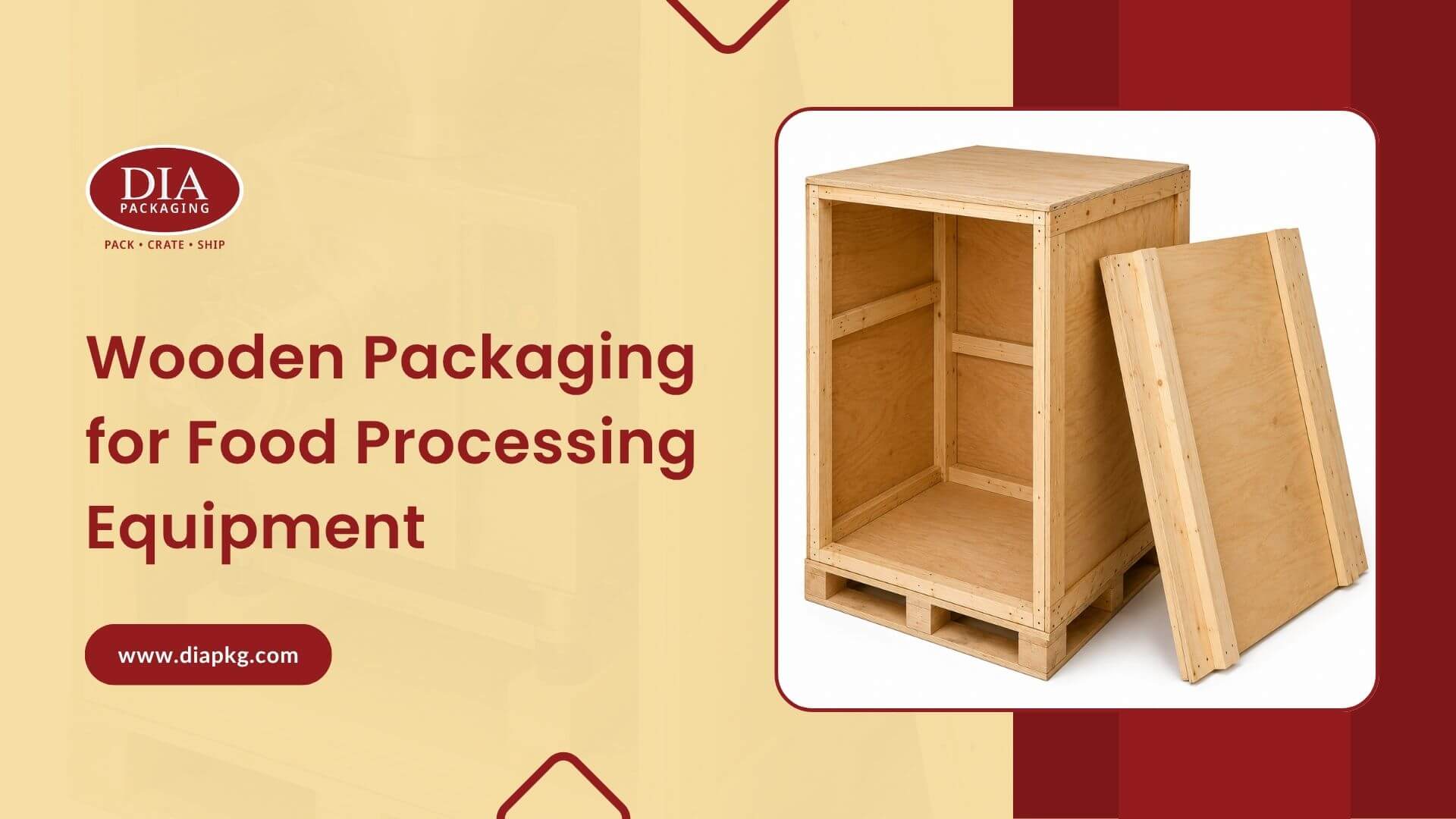
Food processing equipment can be large, heavy, and costly. Machines such as mixers, filling machines, cutters, ovens, conveyors, and packing systems often need to travel long distances before they reach their final location. During transport, these machines can face bumps, dust, moisture, and rough handling.
Good packaging helps protect the equipment from these risks. Wooden packaging is one of the common ways to keep food processing equipment safe during storage and transport. It can be made to match the size, weight, and shape of the machine, giving it strong support from the outside.
Why Food Processing Equipment Needs Strong Packaging
Food processing machines often contain delicate parts. Motors, control panels, pipes, screens, and moving parts can be damaged if the machine is not packed properly.
A small hit during loading may cause dents or scratches. Strong shaking during a long truck journey can also loosen parts. If the equipment travels by sea, moisture can create another problem. Water and humid air may lead to rust on metal parts.
This is why packaging needs to do more than simply cover the machine. It should hold the equipment firmly and help protect it from outside conditions.
Wooden packaging can provide this type of protection when it is planned and built correctly.
What Is Wooden Packaging?
Wooden packaging is a protective structure made from materials such as timber, plywood, and wooden boards. Depending on the equipment, it can include a wooden crate, box, case, pallet, or frame.
The packaging is usually built around the equipment instead of using one standard size. This allows the package to fit the machine closely.
For example, a small food mixer may need a simple wooden frame and base. A large processing machine may need a strong wooden crate with extra supports inside.
The choice depends on the machine’s size, weight, shape, and travel conditions.
Main Benefits of Wooden Packaging
One of the biggest benefits of wooden packaging is strength. Properly built wooden crates can support heavy equipment and help reduce the chance of damage during handling.
Another benefit is flexibility. Wood can be cut and joined in many ways. This makes it easier to create packaging for machines with unusual shapes or sizes.
Wooden packaging also provides a solid base for lifting. A well-built base can make it easier for forklifts and other lifting equipment to move the packed machine.
There are several other benefits.
- Good support: Strong wooden frames can help keep heavy machines in place.
- Protection from impact: Wooden walls can reduce the effect of bumps and knocks.
- Easy handling: Crates can be designed for forklifts and lifting equipment.
- Flexible design: Packaging can be made to fit different machines.
- Suitable for long-distance transport: Properly built crates can protect equipment during road, rail, sea, or air transport.
- Stacking support: Some wooden packages can be designed to allow safe stacking when suitable.
Wooden Crates for Heavy Equipment
A wooden crate is often used when a machine needs protection on all sides. The crate creates a strong outer layer around the equipment.
Before the crate is built, the equipment should be measured carefully. The packaging should provide enough room for protective materials while keeping the machine secure.
The machine may be placed on a wooden base and fixed in position. Extra wooden supports can then be added around it. These supports help prevent the equipment from moving inside the crate.
For very heavy machines, the base needs special attention. A weak base can cause problems during lifting or transport. The base should be strong enough to carry the full weight of the equipment.
Protecting Equipment From Moisture
Moisture is a major concern when food processing equipment travels through areas with high humidity or during sea transport.
Wooden packaging by itself does not make equipment waterproof. Extra protection may be needed.
The machine can be covered with a suitable moisture barrier before the wooden crate is closed. Drying materials may also be used inside the package to help control moisture.
For equipment that contains metal parts, moisture protection is especially important. A small amount of trapped moisture can cause rust if the machine stays packed for a long time.
The packaging plan should consider the expected travel time, weather, storage conditions, and destination.
Keeping the Machine Secure Inside the Crate
A wooden crate is only useful if the equipment stays in place.
The machine should be fixed to the base using suitable supports or fasteners. Heavy parts may need additional support. Parts that can move during transport should also be secured.
There should not be too much empty space around the equipment. Large gaps can allow the machine to move when the crate is shaken.
At the same time, the equipment should not be pressed tightly against the wooden walls. Protective material can be placed between the machine and the crate where needed.
A careful balance helps keep the equipment safe without putting pressure on sensitive parts.
Choosing the Right Wood
The type and quality of wood matter. The material should be strong enough for the weight of the equipment and suitable for the expected transport conditions.
Plywood can be useful for crate walls because it provides a smooth and solid surface. Timber can be used for frames, supports, and bases.
The wood should also be in good condition. Broken, weak, or damaged boards can reduce the strength of the package.
For international shipping, wooden packaging may need to meet rules for treated wood. Countries can have specific requirements for wood used in export packaging. Following these rules helps prevent delays at customs and ports.
Packaging for International Shipping
Food processing equipment is often shipped between countries. This means the packaging must be ready for a longer and more demanding journey.
The package may be loaded and unloaded several times. It may travel by truck before reaching a port, spend time at a warehouse, and then travel by ship before reaching its destination.
Because of this, the crate should be strong enough to handle repeated movement.
The packaging should also have clear labels. Information such as weight, lifting points, handling instructions, and the correct position of the crate can help workers move it safely.
For international shipments, the wooden material should also meet the required treatment and marking rules.
Cost and Practical Benefits
Wooden packaging can be a practical choice for companies that ship food processing equipment. The cost depends on the size of the machine, the amount of wood needed, the design, and the level of protection required.
Simple packaging may seem cheaper, but poor protection can lead to much higher costs if damage occurs to the machine.
Repairing a large processing machine can take time and money. In some cases, damaged equipment may also delay production or installation.
Good packaging helps reduce these risks before the machine leaves the factory.
A Better Way to Pack Food Processing Equipment
The best wooden packaging starts with planning. The packaging team should understand the equipment before choosing the design.
They should consider the machine’s weight, size, fragile parts, lifting points, travel distance, storage time, and weather conditions.
The machine should then be placed on a strong base and secured properly. Protective materials can be added where needed. Finally, the wooden crate should be closed and checked before shipment.
A final inspection is important. The team should make sure the crate is strong, the equipment cannot move freely, and all handling labels are easy to see.
Conclusion
Wooden packaging plays an important role in protecting food processing equipment during transport and storage. A strong wooden crate or case can help protect heavy machines from bumps, movement, dust, and other common transport risks.
However, good results depend on proper design and careful packing. The wood must be strong, the machine must be secured, and moisture protection should be added when needed.
For international shipping, companies should also follow the rules for wooden packaging in the countries involved.
Using the right materials and methods gives food processing equipment strong protection with wooden packaging from the factory to its final destination. This helps companies receive their machines in good condition and get them ready for use with fewer problems.