Online shopping has made it easier than ever to buy products from almost anywhere. With just a few clicks, customers can order clothes, electronics, cosmetics, food, home items, and many other products. But there is one problem that online sellers continue to face: products can get damaged during shipping, leading to customer complaints and returns.
Packaging plays an important role in solving this problem. A strong and well-designed package can protect a product from bumps, drops, pressure, moisture, and movement during delivery. It can also help customers receive exactly what they ordered in good condition.
This is where custom packaging solutions can make a difference.
Why Shipping Damage Happens
Products go through many steps before they reach the customer. A package may be moved from a warehouse to a delivery truck, sorted at a shipping center, loaded onto another vehicle, and carried to the customer’s home.
During this journey, packages can be dropped, stacked under heavy boxes, pushed around, or exposed to rain and heat.
Poor packaging can make these problems worse. A box that is too large may allow the product to move around inside. A box that is too small may put pressure on the product. Weak materials may tear or break before the package reaches its destination.
Fragile products face even greater risks. Glass items, electronics, bottles, ceramics, and other delicate goods need extra protection.
How Custom Packaging Helps
Custom packaging is made to fit a particular product. Instead of using one standard box for many different items, sellers can choose packaging based on the product’s size, weight, shape, and level of protection needed.
A good custom package can reduce empty space inside the box. This limits product movement during shipping and lowers the chance of damage.
For example, imagine shipping a small glass bottle in a large box with little protection. The bottle may move from one side of the box to another during transport. If the package is dropped, the bottle could break.
A package designed specifically for that bottle can hold it firmly in place. Protective inserts can also be added around the product to absorb some of the impact.
Choosing the Right Packaging Material
The packaging material should match the product.
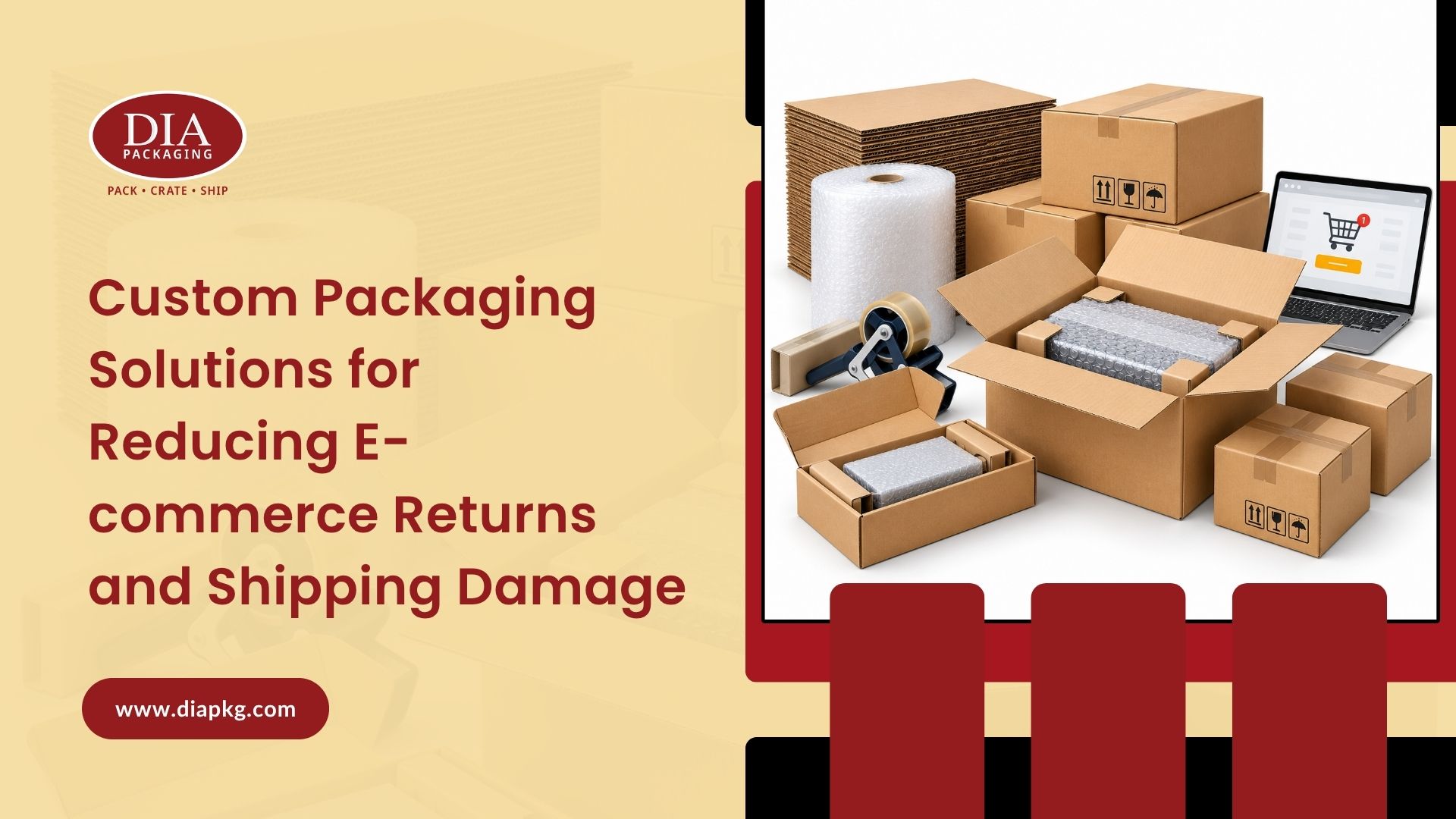
Corrugated cardboard is a common choice for e-commerce shipping because it is light, strong, and available in different thicknesses. Sellers can choose stronger cardboard for heavy or fragile products.
Paper-based inserts can help keep products in place. Molded inserts can provide a snug fit for items that need more protection. Bubble wrap and other cushioning materials can also protect fragile goods, although businesses should consider recyclable or reusable options where suitable.
For products that may be affected by water, sellers can use moisture-resistant packaging or protective inner layers.
The goal is not simply to use more material. The goal is to use the right material in the right way.
The Importance of a Proper Fit
A package should have enough room for the product and its protective material, but it should not have large amounts of unused space.
Too much empty space allows the product to move around. This can cause scratches, dents, cracks, and other damage.
At the same time, forcing a product into a package that is too small can create pressure. This may damage the product before it even leaves the warehouse.
Custom sized boxes can solve both problems. They can provide a closer fit and reduce unnecessary movement inside the package.
A better fit can also reduce the amount of extra filling material needed.
Protective Inserts Can Add Extra Safety
Some products need more than a strong outer box. Protective inserts can hold the product in place and create a layer between the product and the outside of the package.
For example, a seller shipping a set of glass cups can use inserts with separate spaces for each cup. This keeps the items from hitting one another during transportation.
Electronics can also benefit from inserts that hold the product and its parts securely.
The right insert depends on the product. Some businesses use cardboard dividers, molded paper, foam, bubble wrap or other protective materials.
Packaging Can Help Reduce Product Returns
Not every return happens because a customer changes their mind. Some returns happen because the product arrives damaged.
A damaged item can create several problems for an online seller. The seller may need to pay for return shipping, inspect the item, replace it, and send another product. The customer may also lose trust in the business.
Better packaging can help prevent these problems.
When customers consistently receive products in good condition, they are less likely to return items because of shipping damage. This can save money and improve the overall shopping experience.
However, packaging alone cannot prevent every return. Customers may still return products because of size, color, personal preference, or other reasons.
Avoiding Over-Packaging
More packaging does not always mean better protection.
Using too many layers can increase packaging costs, shipping weight, storage needs, and waste. It can also make the package harder for customers to open.
The better approach is to find the right balance between protection and material use.
Businesses can test different box sizes, inserts, and cushioning methods to see which design protects the product without adding unnecessary material.
This can lead to packaging that is both practical and cost-effective.
Packaging Tests Matter
Before using a new package for thousands of orders, businesses should test it.
A simple test can include checking what happens when a package is dropped, stacked, moved, or exposed to normal shipping conditions.
Businesses can also review returned products to find patterns. If many customers report cracked corners, broken parts, crushed boxes, or scratched surfaces, the packaging may need to be changed.
These tests can help sellers find weak points before customers do.
Custom Packaging Can Improve the Customer Experience
The package is often the first physical part of an online order that a customer sees.
A clean, secure, well sized package can make a good impression. It tells customers that the seller has taken care with their order.
Custom packaging can also include simple features such as easy-open tabs, clear labels, product protection, and organized inserts.
These small details can make opening an order easier and reduce the chance of damage during unpacking.
A Practical Approach for E-commerce Businesses
Businesses do not need to redesign every package at once.
A good starting point is to identify products that have the highest damage or return rates. Then, review the packaging used for those products.
Ask a few simple questions:
Does the product move inside the box?
Is there too much empty space?
Is the outer box strong enough?
Does the product need an insert?
Can the package handle normal shipping conditions?
Is unnecessary packaging being used?
The answers can helps your businesses choose better packaging designs.
Conclusion
Shipping damage can hurt both an e-commerce business and its customers. A damaged product can lead to returns, extra costs, wasted time, and unhappy customers.
Custom packaging provides a practical way to reduce these problems. By choosing the right box size, materials, cushioning, and protective inserts, businesses can give products better protection throughout the shipping process.
The best packaging is not always the biggest or strongest package. It is packaging designed around the product and the journey it must survive.
For e-commerce businesses, investing in the right packaging can be a simple step toward fewer damaged orders, fewer shipping-related returns, and a better experience for customers.