Cardboard tubes are all around us, even if we do not always notice them. They are used to pack posters, store paper rolls, protect products, and hold many everyday items. You may have seen them inside toilet paper rolls, kitchen paper rolls, or packaging boxes. Some cardboard tubes are small and light, while others are thick and strong enough to carry heavy materials.
But have you ever wondered how these simple tubes are made? How does a flat sheet of paper turn into a round, strong tube?
The process is interesting and uses a mix of paper, glue, machines, and careful work. Each step helps turn simple paperboard into a useful packaging tube. Let us look at how cardboard tubes are made, from the first sheet of paper to the finished product.
1. Choosing the Right Paperboard
The first step in making a cardboard tube is choosing the right paperboard. Paperboard is a thick type of paper that is stronger than the paper we use for writing or printing.
The type of paperboard used depends on what the tube will carry or protect. For example, a tube used for wrapping paper does not need to be as strong as one used for holding heavy rolls of fabric or other materials.
Manufacturers choose paperboard based on a few important things:
- Thickness: Thick paperboard helps make stronger tubes.
- Strength: The paper should not bend or break easily
- Quality: Clean and even paper helps make smooth tubes.
- Weight: The paper should be strong enough without making the tube too heavy.
Some manufacturers also use recycled paper. This helps reduce waste and gives old paper a new purpose.
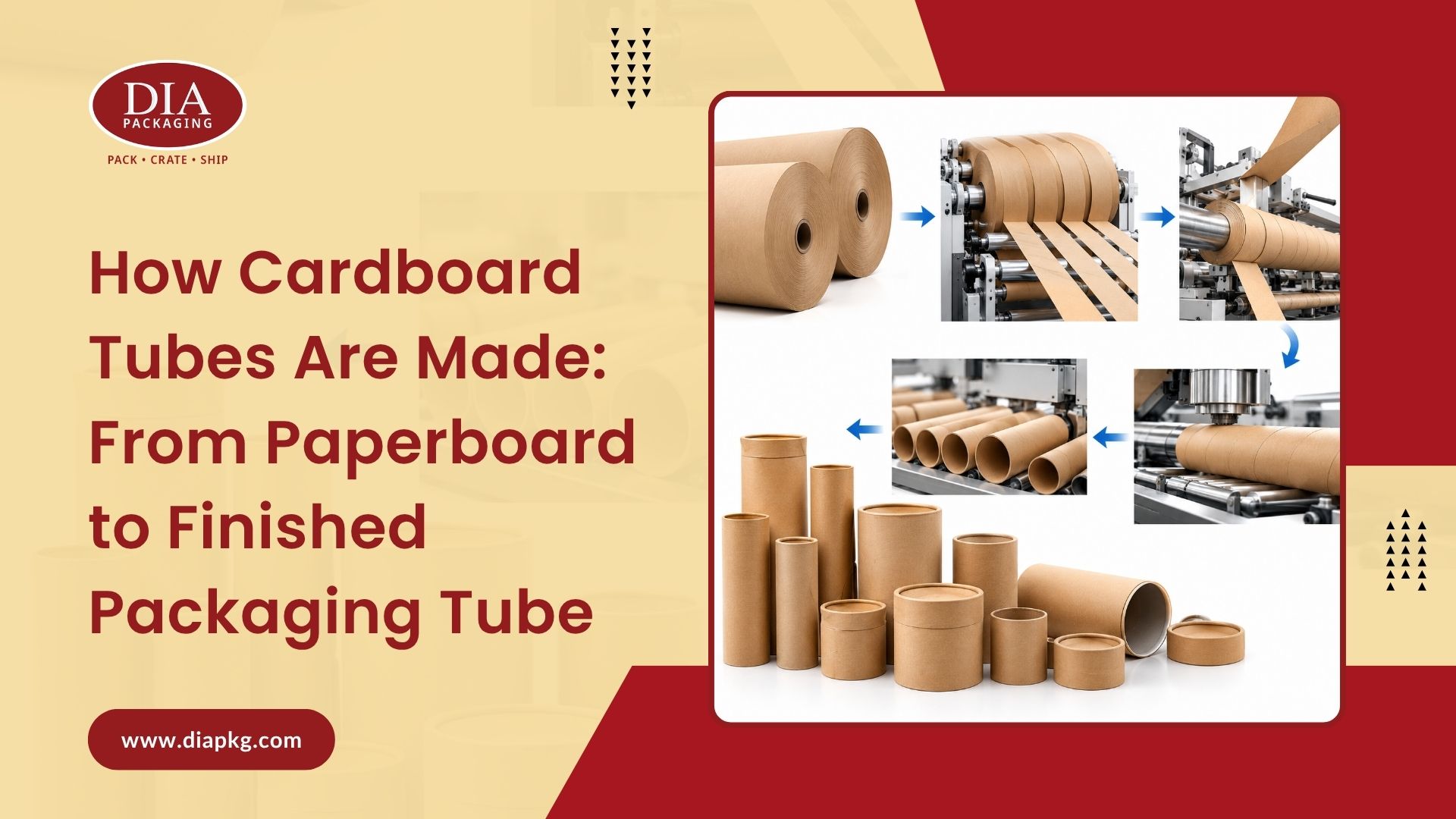
2. Cutting Paperboard into Long Strips
Once the paperboard is selected, it is cut into long, narrow strips. These strips will be used to make the tube.
Large rolls or sheets of paperboard are placed into cutting machines. The machines cut the paper into strips of the required width. The width depends on the size and thickness of the tube being made.
For example, a small tube may need narrower strips, while a larger tube may need wider ones.
This step needs care because the strips must have an even width. If the strips are uneven, the finished tube may not have the right shape or size.
The cut strips are then prepared for the next step, where they will be joined together using glue.
3. Applying Glue to the Paper Strips
Glue plays an important role in making cardboard tubes. It holds the paper layers together and helps the tube stay strong.
A special type of glue is spread across the paper strips with the help of machines. The glue must be spread evenly so that every part of the paper can stick properly.
If too little glue is used, the paper layers may come apart. If too much glue is used, it can make the tube messy or affect its quality.
The amount and type of glue depend on the paper used and the purpose of the tube.
Once the glue is applied, the paper strips are ready to be rolled into a tube.
4. Rolling the Paper into a Tube
This is the stage where flat paper starts to take the shape of a round tube.
The glued paper strips are fed into a tube-making machine. The machine wraps the paper around a round metal rod or another round support. Each new layer is placed over the previous one.
As the paper layers come together, they form a strong, hollow tube.
The number of paper layers depends on how thick and strong the tube needs to be. A tube used for light packaging may need fewer layers. A tube made to hold heavy materials may need more layers.
The machine keeps the paper moving and rolling at a steady speed. This helps make sure the tube has an even shape and does not have loose layers.
At this point, the tube may still be soft because the glue needs time to set.
5. Drying and Setting the Tube
After rolling, the tube needs time to dry. This allows the glue to hold the paper layers together properly.
Depending on the type of glue and the manufacturing process, the tubes may dry naturally or pass through a drying system.
Drying is an important step because it helps the tube become firm and strong. If the glue has not set properly, the tube may lose its shape or the layers may begin to separate.
Manufacturers also check the tubes during this stage. They look for problems such as loose paper, uneven surfaces, or changes in shape.
Once the tubes are dry and firm, they are ready to be cut into the required lengths.
6. Cutting Tubes into the Required Sizes
Not every cardboard tube has the same length. Some are short and used for small products, while others are long and used for large rolls of paper, cloth, or plastic sheets.
To get the right size, the long tubes are sent through cutting machines. These machines cut them into smaller pieces based on customer needs.
The cutting process must be accurate. Each tube should have a clean and even edge. Uneven cuts can make the tube harder to use and may affect how well it fits with other products.
Manufacturers can make tubes in different lengths, widths, and thicknesses. This makes them useful for many types of packaging and storage needs.
7. Finishing the Tubes
After cutting, the tubes may go through a finishing process. This step improves their look and makes them ready for use.
The finishing work depends on the purpose of the tube. Some tubes are kept simple, while others need extra care.
Common finishing steps include:
- Smoothing the edges: This helps remove rough or uneven parts.
- Checking the shape: The tube should be round and should not be bent.
- Adding printed details: Some tubes have names, logos, or other information printed on them.
- Adding a special outer layer: Some tubes need an extra layer to protect their surface or improve their appearance.
Not every tube needs all these steps. The final look depends on what the customer wants and how the tube will be used.
8. Quality Checks Before Delivery
Before cardboard tubes are packed and sent to customers, they go through quality checks.
These checks help make sure the tubes are ready for their intended use. Workers and machines may check different parts of the finished product.
Some important things checked include:
- Length: Is the tube cut to the correct size?
- Thickness: Are the paper layers even?
- Shape: Is the tube round and straight?
- Strength: Can the tube handle the weight or pressure it is expected to carry?
- Surface: Is the outside clean and free from major damage?
If a tube does not meet the required quality standards, it may be removed for further checking or rejected.
These checks help manufacturers send good-quality products to customers and reduce waste.
9. Packing and Sending the Finished Tubes
Once the tubes pass all quality checks, they are ready for packing.
The tubes are arranged in groups and packed carefully so they do not get damaged during storage or transport. Depending on their size and use, they may be packed in bundles, wrapped, or placed in larger containers.
After packing, the tubes are sent to businesses that use them for making or protecting other products.
For example, a paper company may use cardboard tubes to hold large rolls of paper. A packaging company may use them to protect posters, drawings, or other items that need to be rolled.
This is the final step in the journey from simple paperboard to a finished packaging tube.
Why Are Cardboard Tubes Useful?
Cardboard tubes may look simple, but they have many useful features. They are light, easy to handle, and available in different sizes and strengths.
Here are some reasons why many businesses use them:
1. They Protect Products
Cardboard tubes help keep products safe from bending, folding, or getting damaged. They are especially useful for items such as posters, paper rolls, and fabric.
2. They Are Lightweight
Since cardboard tubes are not very heavy, they are easy to move, store, and transport.
3. They Can Be Made in Different Sizes
Manufacturers can make tubes with different lengths, widths, and thicknesses to suit different needs.
4. They Can Use Recycled Paper
Many cardboard tubes are made using recycled paper. This helps give used paper a new purpose and can reduce the need for fresh materials.
5. They Have Many Uses
From household products to large industrial rolls, cardboard tubes are used in many different places.
Conclusion
Making a cardboard tube involves several simple but important steps. It begins with choosing good-quality paperboard and cutting it into long strips. The strips are then covered with glue, rolled into layers, dried, and cut into the required sizes. Finally, the tubes are checked, finished, packed, and sent to customers.
Although the process uses machines, each step plays an important role in making a tube that is strong, smooth, and ready to use.
The next time you see a cardboard tube inside a paper roll or holding a poster, remember that it has gone through a careful process to become the useful product you see. Something as simple as paperboard can become strong packaging when the right materials and steps are used.