Warehouses play an important role in our daily lives. Almost every product we buy, from food and clothes to electronics and household items, passes through a warehouse before reaching a store or our homes. Inside these large spaces, workers receive products, sort them, pack them, and prepare them for delivery. As more people shop online and expect faster deliveries, warehouses have to handle more goods than ever before.
One important change helping warehouses manage this growing work is the use of automated palletizing systems.
These systems help arrange products on pallets with very little manual work. They make it easier to move, store, and transport goods from one place to another. Many warehouses are now using this technology to save time, reduce physical work, and improve daily operations.
But what exactly are automated palletizing systems, and how are they changing the future of warehousing? Let’s take a closer look.
What Are Automated Palletizing Systems?
A pallet is a flat wooden, plastic, or metal platform used to carry and store products. Workers place boxes, bags, or other goods on these platforms so that they can be moved easily using machines called forklifts.
Palletizing means arranging products on a pallet in a safe and organized way.
In the past, workers had to lift and place each box on a pallet by hand. This work could take many hours, especially in busy warehouses that handle thousands of boxes every day.
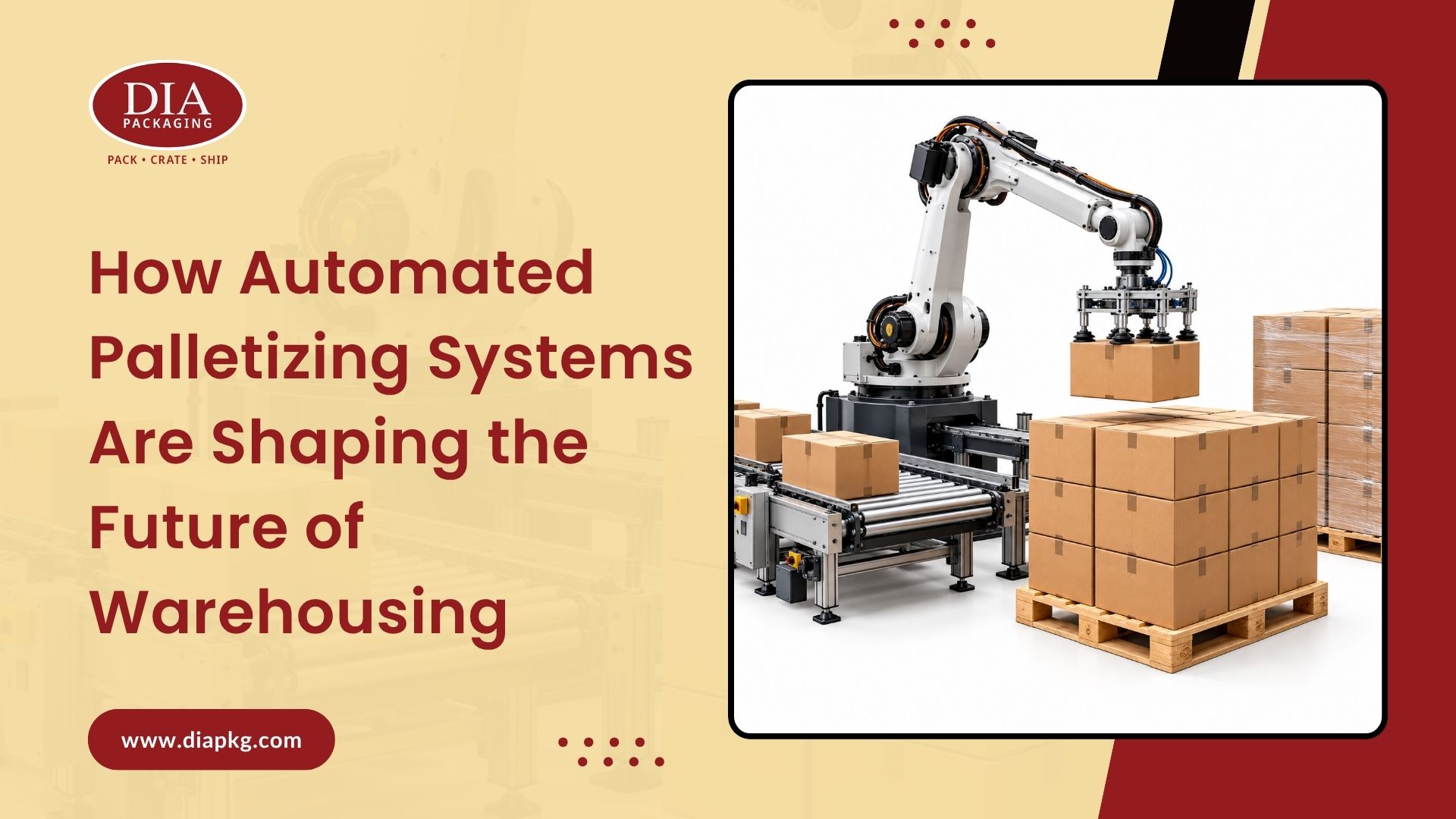
Automated palletizing systems use machines and robots to do much of this work. These machines pick up products, place them in the right position, and build neat stacks on pallets.
Some systems can handle different box sizes and shapes. Others are made to work with one type of product. Once the pallet is full, it can be moved to a storage area or prepared for delivery.
Why Are Warehouses Moving Towards Automation?
Warehouses are handling more orders than before. Online shopping has made it possible for people to buy almost anything with a few clicks. This means businesses need to pack and send products quickly.
Doing all the work by hand can become difficult when there are hundreds or thousands of orders to manage.
Here are some common reasons why warehouses are choosing automated palletizing systems.
1. Faster Work and Better Time Management
Speed is one of the biggest benefits of automated palletizing.
A machine can pick up and arrange boxes again and again without needing long breaks. It can also follow the same pattern each time, which helps keep the work moving.
For example, imagine a warehouse that needs to prepare 500 boxes for delivery. If workers arrange every box by hand, the job may take a long time. An automated system can complete much of this work faster.
This allows warehouses to prepare more products in less time and send orders out on schedule.
2. Less Physical Work for Employees
Lifting heavy boxes throughout the day can be tiring. It can also lead to back pain, muscle injuries, and other health problems.
Automated palletizing systems take over much of the heavy lifting. Workers do not need to carry and stack every box by hand.
Instead, they can focus on other useful tasks, such as checking products, managing stock, and making sure orders are correct.
This makes the workplace more comfortable and can help reduce the risk of injuries.
3. Fewer Mistakes During Stacking
When workers arrange hundreds of boxes, mistakes can happen. Boxes may be placed unevenly, stacks may become unstable, or some products may be damaged.
Automated systems follow set instructions when placing products on pallets. They can arrange boxes in a planned pattern and help create strong, balanced stacks.
This is useful because poorly arranged pallets can fall during movement or transport.
By keeping products in the right position, automated systems help protect goods and make them easier to move.
4. Better Use of Warehouse Space
Space is very important in a warehouse. Every shelf, storage area, and walking path needs to be planned carefully.
Automated palletizing systems help arrange products in a neat and organized way. This makes it easier to move pallets into storage areas and use available space.
When products are stacked properly, warehouses can also reduce wasted space between boxes.
Better use of space means businesses can store more goods without always needing a larger building
The Role of Robots in Modern Warehouses
Robots are becoming a common part of many warehouses. Some automated palletizing systems use robotic arms to pick up boxes and place them on pallets.
These robotic arms can move in different directions and follow instructions given through a computer.
For example, a robot may pick up a box from a moving belt, turn it in the right direction, and place it on a pallet. It repeats this task until the pallet is full.
Some robots can also work with different box sizes. This makes them useful for warehouses that handle many types of products.
Robots do not always work alone. Workers are still needed to check the machines, solve problems, and make sure everything runs safely.
This shows that automation is not about removing people from warehouses. It is about helping people do their jobs more easily.
How Automated Palletizing Improves Safety
Safety should always be a top concern in a warehouse.
Workers who lift heavy boxes many times a day may face injuries. There is also a risk of accidents when boxes fall from poorly stacked pallets.
Automated palletizing systems can help reduce these risks.
Machines handle much of the lifting and stacking, which means workers have less need to carry heavy products. They also place boxes in planned positions, helping create more stable loads.
Many modern systems include safety features such as sensors, warning lights, and protective barriers. These features help detect people or objects near moving machines and reduce the chance of accidents.
However, workers still need proper training. They must know how to use the equipment safely and what to do if a machine stops working.
Different Types of Automated Palletizing Systems
Not every warehouse has the same needs. Some handle small boxes, while others move large bags, food items, or heavy goods. Because of this, there are different types of palletizing systems.
Robotic Palletizers: These systems use robotic arms to pick up products and arrange them on pallets. They are useful when warehouses need to handle different product shapes and sizes.
Conventional Palletizers: These machines use moving belts and other parts to arrange products in a set pattern. They are often used in places where large numbers of similar products need to be stacked.
Collaborative Robots: These are robots designed to work near people in certain tasks. They can help with lifting and placing products, while workers handle other parts of the job. Safety rules and proper equipment are still important.
Each type has its own uses. A warehouse needs to choose a system based on the products it handles, the amount of work it does, and the space it has.
The Future of Warehousing with Automated Palletizing
Technology is changing how warehouses work, and automated palletizing is likely to play an even bigger role in the coming years.
Future systems may become better at handling different products, changing stacking patterns, and working with other warehouse machines.
For example, a warehouse may use software to tell a palletizing machine how to arrange boxes based on their size and weight. The system can then prepare pallets in a way that makes them easier to store and transport.
Some warehouses may also connect palletizing machines with moving robots. These robots can carry finished pallets from one area to another without needing a worker to move them by hand.
Another important change may be the use of smart sensors. These are small devices that collect information about machines and their surroundings. They can help workers notice problems early and keep equipment working properly.
As these systems improve, warehouses may be able to handle more orders while making better use of time, space, and workers.
Challenges of Using Automated Palletizing Systems
Although automated palletizing has many benefits, it also comes with a few challenges.
The first challenge is cost. Buying and installing machines can require a large amount of money. Small warehouses may find it difficult to afford these systems.
Another challenge is training. Workers need to learn how to operate the machines and understand basic safety rules. Some companies may also need trained staff to repair and maintain the equipment.
Space can also be a problem. Certain machines need a large area to work properly, so warehouses must plan their layouts before installing them.
Even with these challenges, many businesses see automated palletizing as a useful long-term choice because it can save time and reduce physical work.
Conclusion
Automated palletizing systems are changing the way warehouses handle products. They help arrange boxes faster, reduce heavy lifting, improve stacking, and make better use of storage space.
As online shopping and customer needs continue to grow, warehouses will need better ways to manage their daily work. Automated machines and robots can help meet these needs while allowing workers to focus on other important tasks.
The future of warehousing will likely bring more machines that can work safely alongside people. Automated palletizing systems are an important part of this change.
In simple words, they help warehouses work faster, keep products organized, and make daily tasks easier for everyone involved.