Corrugated boxes are used to pack and ship many products, from food and clothes to electronics and household items. They help protect products during travel and make it easier to store and move goods. But boxes do more than keep products safe. They can also show a brand name, product details, care instructions, and other useful information.
The way a box is printed can affect its look, cost, and quality. Two common choices are full color printing and flexographic printing. Both methods can print words, logos, and images on boxes, but they work in different ways.
If you are new to box printing, choosing between these methods may seem confusing. The good news is that the choice becomes easier when you understand how each method works and what it offers.
In this article, we will explain full color and flexographic printing in simple terms, compare their main differences, and help you decide which one may be right for your needs.
What Is Full Color Printing?
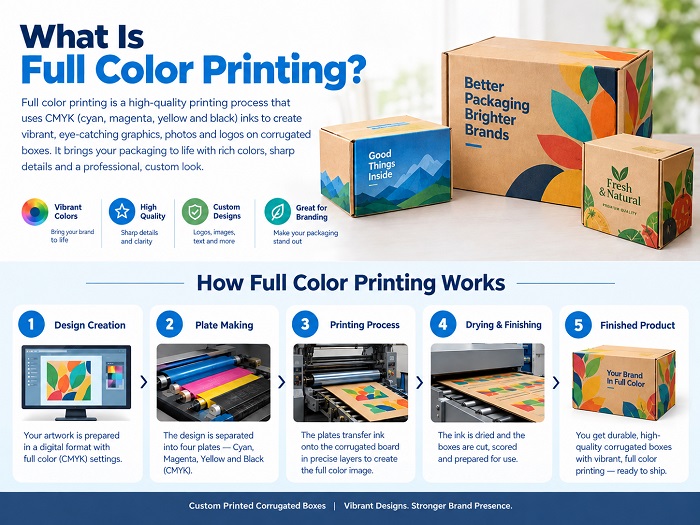
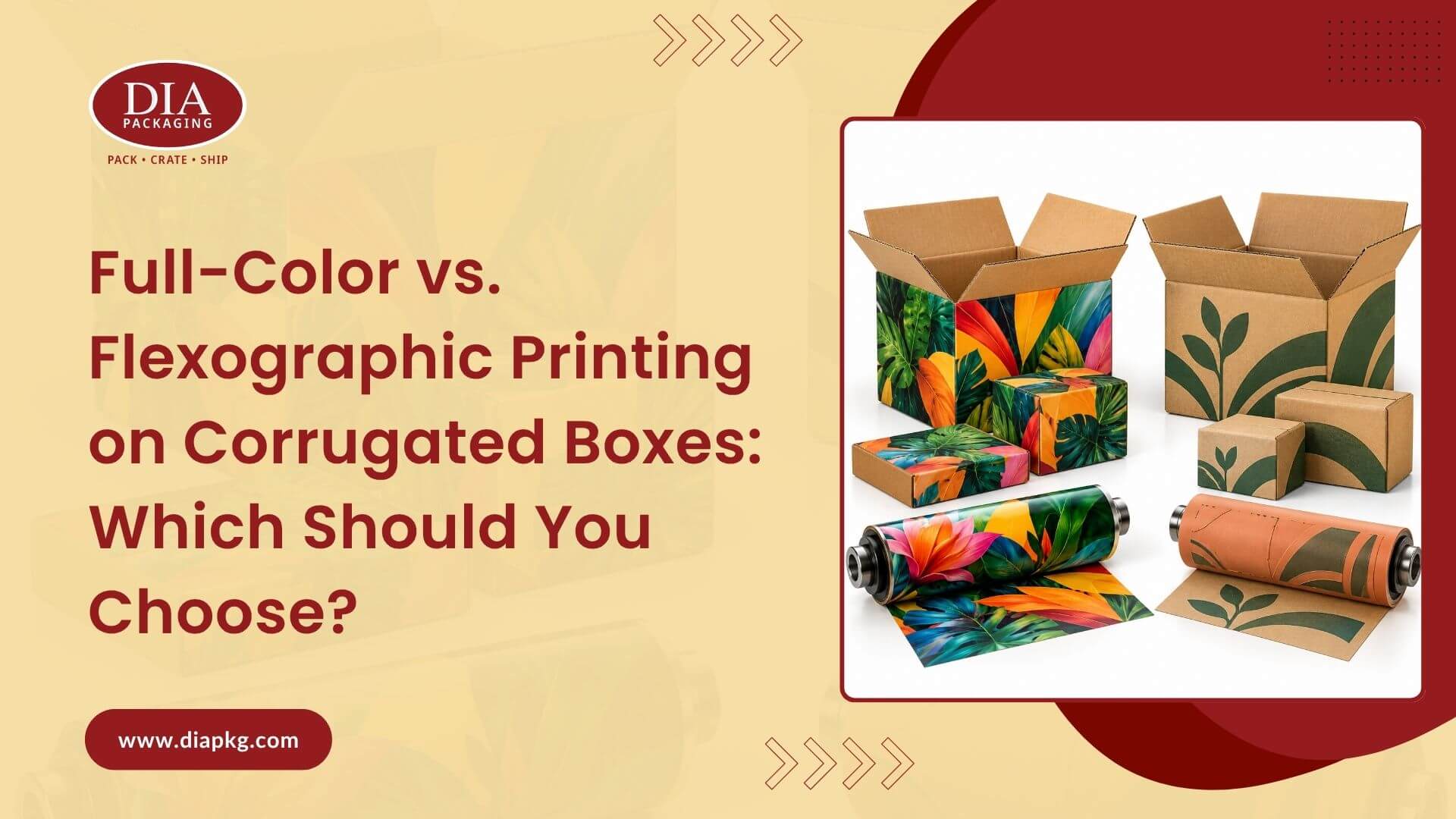
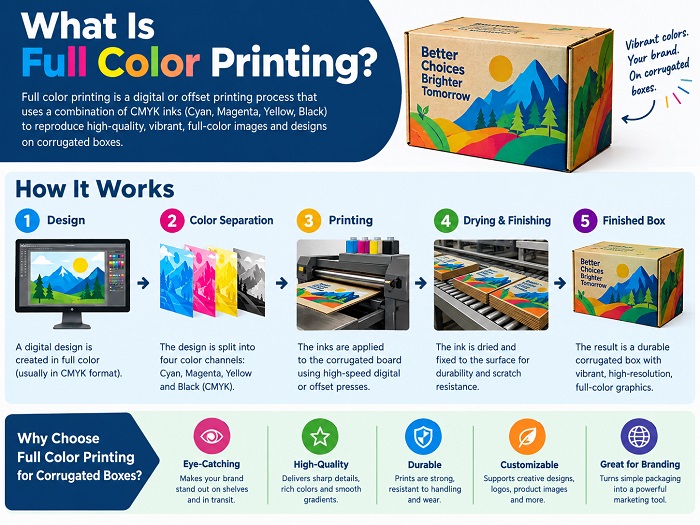
Full color printing is a method that uses several colors to create detailed pictures, designs, and text. It often uses four basic ink colors: cyan, magenta, yellow, and black. These colors are also known as CMYK.
By mixing these four colors in different amounts, a printer can create many shades and colors. This makes full color printing a good choice for designs that include photographs, colorful artwork, and detailed product images.
For example, imagine a box used to pack a toy. The box may show a picture of the toy, a bright background, and several colorful details. Full color printing can help bring these designs to life.
This method is useful when the appearance of the box matters a lot. It allows businesses to create eye catching packaging that helps customers recognize a product.
Full color printing can also work well for short print runs. A print run means the total number of boxes being printed in one order. If you need only a small number of boxes for a new product, a special offer, or a test launch, full color printing may be a suitable choice.
However, the cost per box can be higher in some cases, especially when printing large quantities. The final result also depends on the printer, the material used, and the type of design.
What Is Flexographic Printing?
Flexographic printing, often called flexo printing, is another common method used for corrugated boxes. It uses a flexible printing plate to transfer ink onto the box material.
Think of the printing plate as a stamp. The plate carries the design, and the printer presses it against the surface to transfer the ink. The same plate can be used to print the same design on many boxes.
Flexographic printing is often used for large orders because it can print many boxes quickly. Once the printing plates are ready and the machine is set up, the process can produce a large number of boxes in less time.
This method is well suited to simple designs, such as company logos, product names, shipping details, and basic pictures. It can also print using several colors, depending on the machine, the plates, and the design.
For example, a company that ships hundreds or thousands of boxes each week may use flexographic printing to add its name, logo, and handling instructions.
One thing to remember is that making the printing plates and setting up the machine can add to the starting cost. This means flexographic printing may not be the cheapest option for very small orders. For large orders, however, the cost of setting up the machine is spread across many boxes.
Full Color vs Flexographic Printing: Key Differences
Both methods can produce useful and attractive packaging. However, they differ in how they print, how much they may cost, and which designs they handle best.
1. Print Quality and Appearance
Full color printing is often a better choice for designs with many colors, detailed pictures, and smooth changes between shades. It can show small details that may be difficult to print clearly with some flexographic setups.
This makes it useful for product packaging where pictures and colors play an important role.
Flexographic printing works well for simple designs, bold text, logos, and clear shapes. The right equipment and setup can also produce good results with more complex artwork.
However, the rough surface of corrugated cardboard can affect the final print quality. The result depends on the printing method, the board surface, and the ink used.
2. Printing Cost
Cost is one of the most important things to consider when choosing a printing method.
Full color printing can be more affordable for small orders because it may need less setup work. You can print a limited number of boxes without paying a large amount for printing plates.
Flexographic printing often requires an initial payment for plates and machine setup. This can make small orders more expensive. But when you print a large number of boxes, the cost per box may become lower.
For example, if a small business needs 100 boxes for a new product, full color printing may be worth considering. If a large company needs 10,000 boxes with the same design, flexographic printing may offer better value.
These are general examples, not fixed rules. Actual prices depend on the printer, box size, number of colors, design, and order quantity.
3. Printing Speed
Full color printing can be a good option when you need a small order without a long setup process. Some digital printing systems can move from one design to another with little preparation.
Flexographic printing is often a strong choice for large orders. After the plates are prepared and the machine is ready, it can print boxes at high speed.
If you need thousands of identical boxes, this speed can help you meet your delivery schedule.
Still, the total time also depends on machine availability, artwork approval, setup, drying, and other production steps. It is best to ask your printing supplier about the expected delivery time.
4. Design Flexibility
Full color printing gives you more freedom when working with colorful images, photographs, and detailed artwork. It is also useful when you need to change the design often.
For example, a business may want different packaging for different products or seasonal offers. Digital full color printing can make these changes easier, depending on the printing system used.
Flexographic printing is a good fit when the design stays the same for a long time. Once the plates are ready, the same design can be printed on many boxes.
If you need frequent design changes, ask whether new plates or other setup changes will be needed. These changes may increase the cost of flexographic printing.
5. Best Order Size
The number of boxes you need can help you choose the right method.
Full color printing is often worth considering for small and medium orders, especially when the design has many colors or detailed images.
Flexographic printing is often suitable for medium and large orders, especially when you need the same design on every box.
There is no single order size that works for every business. A printer may offer different machines, prices, and services. Ask for quotes for both methods before making a final choice.
6. Ink and Material
Corrugated boxes have a special structure. They usually contain a wavy layer of paper between two flat layers. This structure makes them stronger and helps protect the products inside.
The surface of the box can affect how well the ink appears. Some boxes have a smoother outer layer, while others have a rougher or more natural look.
Both full color and flexographic printing work on corrugated packaging, but the material and printing process determine the best results.
If your design includes small text or detailed pictures, ask the printer to show you a sample on the same type of cardboard you plan to use.
When Should You Choose Full Color Printing?
Full color printing may be the better choice if:
- You need detailed pictures or colorful designs.
- You want your packaging to stand out on store shelves.
- Are you testing a new product and need a small number of boxes.
- You expect to change your packaging design often.
- You want to print different designs without making a new set of plates each time, where the chosen system allows it.
For example, a small company selling handmade gifts may want each box to show bright artwork and product pictures. Full color printing can help create the look the company wants without requiring a very large order.
When Should You Choose Flexographic Printing?
Flexographic printing may be the better choice if:
- You need a large number of boxes.
- Your design uses a few colors and simple shapes.
- You plan to use the same design for a long time.
- You need a fast printing process for large orders.
- You want to lower the cost per box on a large production run.
For example, a food supplier that sends products to shops every week may need thousands of boxes with the same logo and product details. Flexographic printing may be a practical and cost effective option for this type of order.
How to Make the Right Choice
Before choosing a printing method, ask yourself a few simple questions.
- How many boxes do you need?
A small order may work better with full color printing, while a large order may benefit from flexographic printing. - How does your design look?
Photographs and detailed artwork may need full color printing. Simple logos and text may work well with flexographic printing. - How often will the design change?
If you update your packaging regularly, choose a method that makes changes easier and affordable. - What is your budget?
Do not look only at the total price. Compare the cost per box, setup fees, printing quality, and delivery time. - How will the boxes be used?
Shipping boxes may need clear labels and simple branding, while retail boxes may need colorful designs that catch a customer’s attention.
It is also helpful to request printed samples and written quotes from more than one supplier. This allows you to compare the quality and cost before placing a large order.
Final Thoughts
Full color and flexographic printing both have useful benefits for corrugated boxes. The right choice depends on your design, order size, budget, and printing needs.
Full color printing is often a good option for detailed artwork, colorful packaging, and smaller orders. Flexographic printing is often a better fit for large orders that use the same design and need fast production.
Before making a decision, talk to your printing supplier, check sample boxes, and compare the full cost of each option.
The best printing method is not always the one with the brightest colors or the lowest price per box. It is the one that gives you the quality you need, fits your budget, and helps your boxes do their job well.