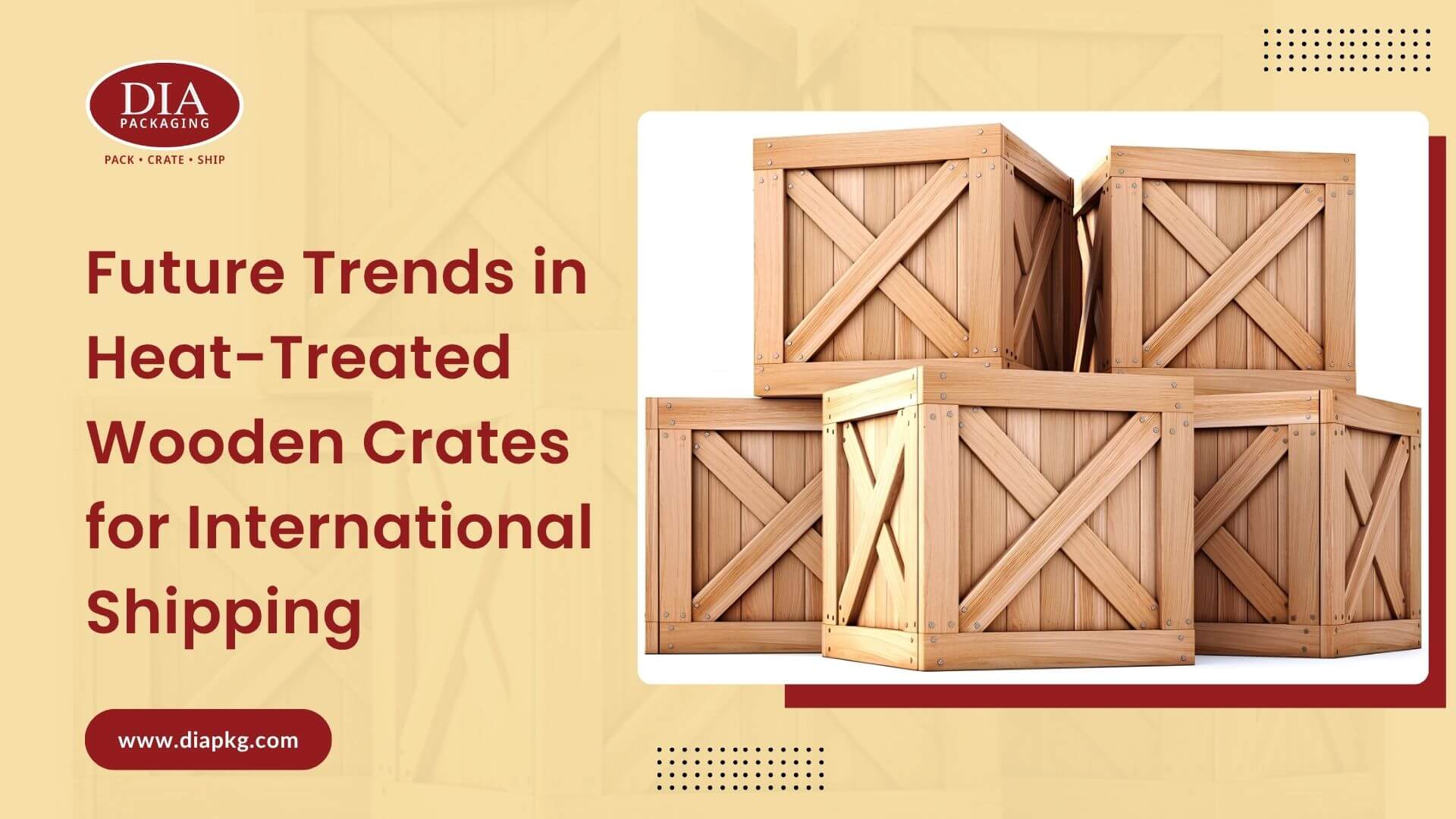
Global trade continues to expand, connecting manufacturers, suppliers, and customers across different parts of the world. As products travel longer distances and pass through multiple transportation channels, the need for reliable packaging becomes more important than ever.
Among the many packaging solutions available today, heat treated wooden crates remain one of the most trusted options for protecting valuable cargo during international shipping.
From heavy industrial machinery and automotive components to fragile equipment and export goods, wooden crates play a critical role in ensuring products reach their destination safely.
While the basic purpose of a wooden crate has remained the same for decades, the industry itself is undergoing significant changes. New regulations, environmental concerns, technological advancements and changing customer expectations are influencing how heat treated wooden crates are designed, manufactured, and used.
As international shipping continues to evolve, several important trends are expected to shape the future of heat treated wooden crates.
Sustainability Will Become a Key Decision Factor
Businesses across industries are paying closer attention to environmental responsibility. Packaging is one area where companies are actively looking for ways to reduce waste and improve sustainability.
Wooden crates already have an advantage because wood is a renewable material when sourced from responsibly managed forests. In the coming years, more crate manufacturers are expected to increase their use of certified timber and adopt practices that minimize material waste during production.
Customers are also becoming more selective when choosing suppliers. Many organizations now consider environmental practices as part of their purchasing decisions. As a result, crate manufacturers that demonstrate responsible sourcing and efficient production methods may gain a stronger position in the market.
Sustainability is no longer viewed as an optional feature. It is gradually becoming an important requirement in global supply chains.
Heat Treatment Will Remain the Preferred Compliance Method
International shipping regulations are becoming increasingly strict, particularly when it comes to preventing the spread of pests through wooden packaging materials.
Heat treatment has become the preferred solution for meeting international standards because it effectively eliminates insects and larvae without relying on chemical treatments.
As environmental regulations continue to tighten around the world, the demand for heat treated wooden crates is expected to increase further.
Many exporters already prefer heat treatment because it simplifies compliance requirements and reduces concerns related to chemical handling.
Future investments in treatment facilities may focus on improving efficiency, reducing energy consumption, and ensuring more consistent treatment results.
This trend will help strengthen the position of heat treated packaging within international trade.
Smarter Packaging Will Enter the Market
Technology is transforming nearly every part of the logistics industry, and packaging is beginning to benefit from these innovations as well.
In the future, wooden crates may become more than simple protective containers. Some manufacturers are exploring ways to integrate tracking technologies directly into packaging systems. QR codes, RFID tags, and digital identification systems can help businesses monitor shipments throughout the transportation process.
For exporters shipping high value equipment, real time visibility can provide greater confidence and control. Tracking solutions can help identify delays, improve inventory management, and support more accurate shipment planning.
Although smart packaging is still developing, its adoption is likely to grow as technology becomes more affordable and easier to implement.
Crate Designs Will Become More Specialized
Not all cargo faces the same transportation challenges. A crate used for shipping industrial machinery requires different protection than one designed for sensitive electronic equipment.
Future crate designs are expected to become more customized based on the specific needs of individual industries. Manufacturers are increasingly using computer aided design tools to create packaging solutions tailored to product dimensions, weight distribution, and transportation conditions.
This approach allows companies to achieve better protection while avoiding unnecessary packaging materials. Specialized internal supports, shock resistant structures, and reinforced loading points may become more common in export packaging.
The focus will shift from standard crate designs toward purpose built solutions that improve cargo safety and efficiency.
Stronger Focus on Moisture Control
Long distance shipping often exposes cargo to varying weather conditions. Products may encounter humidity, rainfall, temperature fluctuations, and extended periods at sea.
While heat treatment helps protect the wood itself, moisture remains a concern for many exported goods. Future crate designs are likely to include enhanced moisture management features to address this challenge.
Manufacturers may increasingly incorporate protective barriers, moisture resistant coatings, ventilation improvements, and internal humidity control systems.
These additions can help reduce the risk of corrosion, mold growth, and product damage during transit.
Industries that transport sensitive equipment will particularly benefit from these advancements.
Lightweight Construction Without Sacrificing Strength
Shipping costs are heavily influenced by weight. Businesses are constantly looking for ways to reduce transportation expenses while maintaining product safety.
This has led crate manufacturers to explore more efficient design methods that use less material without compromising structural performance.
Future heat treated wooden crates may feature optimized construction techniques that provide the same level of protection while reducing overall weight.
Engineers are also improving crate designs through better load distribution and stronger fastening systems. The result is packaging that remains durable enough for international transport while helping businesses manage shipping costs more effectively.
As freight rates continue to fluctuate, lightweight crate designs will likely become increasingly valuable.
Reusable Packaging Systems Will Gain Popularity
Many companies are beginning to evaluate packaging costs over the entire product lifecycle rather than focusing only on a single shipment.
Reusable wooden crates offer an opportunity to reduce waste while generating long term cost savings.
Businesses that regularly move products between manufacturing facilities, warehouses, and international locations may benefit from returnable packaging programs.
Future crate designs may include features that make reuse easier, such as modular construction, collapsible panels, and simplified assembly systems.
As organizations work toward sustainability goals, reusable heat treated crates are expected to become a more attractive option across various industries.
Automation Will Improve Manufacturing Efficiency
The manufacturing sector is increasingly adopting automation, and wooden crate production is no exception.
Modern equipment can improve cutting accuracy, reduce production time, and ensure greater consistency in finished products. Automated manufacturing systems also help minimize material waste and improve quality control.
As demand for customized crates grows, automation will allow manufacturers to produce complex packaging solutions more efficiently.
Faster production cycles can also help exporters meet tight project deadlines and changing customer requirements.
The combination of automation and skilled craftsmanship is likely to define the next generation of crate manufacturing.
Digital Documentation Will Simplify Global Shipping
International trade depends on accurate documentation. Delays often occur when paperwork is incomplete or difficult to verify.
Future shipping processes are expected to become more digital, including the management of heat treatment certifications and compliance records.
Electronic documentation systems can make it easier for customs authorities, freight companies, and importers to verify that packaging meets international standards.
Digital records may also improve traceability by providing quick access to treatment dates, inspection details, and certification information.
This shift toward digital compliance can help reduce administrative burdens while improving efficiency throughout the supply chain.
Growing Demand from Expanding Industries
Several industries are expected to drive future demand for heat treated wooden crates. Renewable energy projects, infrastructure development, manufacturing expansion, and industrial automation all require the transportation of large and valuable equipment.
Many of these products cannot be shipped using standard packaging methods. They require strong, reliable export crates that can withstand long journeys and challenging handling conditions.
As global investment continues in these sectors, the need for high quality heat treated wooden crates is likely to grow alongside them.
Conclusion
Heat treated wooden crates have been a dependable part of international shipping for many years, but their future will be shaped by innovation, sustainability, and evolving trade requirements.
The industry is moving toward smarter packaging, more customized designs, improved moisture protection, reusable solutions, and greater manufacturing efficiency. At the same time, compliance with international regulations will remain a top priority for exporters and packaging providers alike.
While the materials and technologies may continue to evolve, the core purpose of a heat treated wooden crate remains unchanged: protecting valuable cargo throughout its journey. As global trade becomes more complex, these crates will continue to serve as an essential link between manufacturers and customers around the world.